Creating a natural windbreak system is an investment in the long-term health of your farm. By integrating rows of carefully chosen trees, shrubs, and other vegetation, you can reduce wind speed, limit soil erosion, and improve the overall productivity of open fields. This guide will walk you through selecting the right materials, planting strategies, and management techniques to establish an effective living barrier against harsh winds while promoting biodiversity and sustainable agriculture.
Choosing the Right Plant Materials
Successful windbreaks begin with the selection of species adapted to local conditions. Consider climate, soil type, and water availability. Native trees and shrubs often outperform exotics because they’re already well-suited to local pests, temperature ranges, and precipitation patterns. When planning your windbreak, include a mix of trees and shrubs to create multiple canopy layers, improving wind reduction and providing additional habitat for wildlife.
Criteria for Species Selection
- Growth rate and mature height
- Root structure and soil stabilization capacity
- Drought tolerance and water usage
- Resistance to local pests and diseases
- Seasonal foliage density to ensure year-round protection
Recommended Species Mix
- Deciduous trees: oak, maple, and ash for summer shade and winter screening
- Evergreen species: pines and cedars to maintain a constant barrier
- Native shrubs: dogwood, willow, and elderberry to fill mid-level gaps
- Grasses and groundcovers: switchgrass and clover to reduce soil erosion
Designing the Layout and Structure
The effectiveness of a windbreak depends on its orientation, width, and spacing. A properly positioned barrier can reduce wind velocity for a distance up to twenty times its height. Aim to align rows perpendicular to the prevailing wind direction. Use multiple staggered rows instead of a single line to capture and slow winds progressively.
Key Layout Principles
- Orientation: perpendicular to the most common wind path
- Row spacing: 2–3 meters between trees, 1–2 meters for shrubs
- Number of rows: three to five rows for maximum microclimate control
- Height variation: plant taller species in the windward rows and shorter ones behind
Illustrative Example
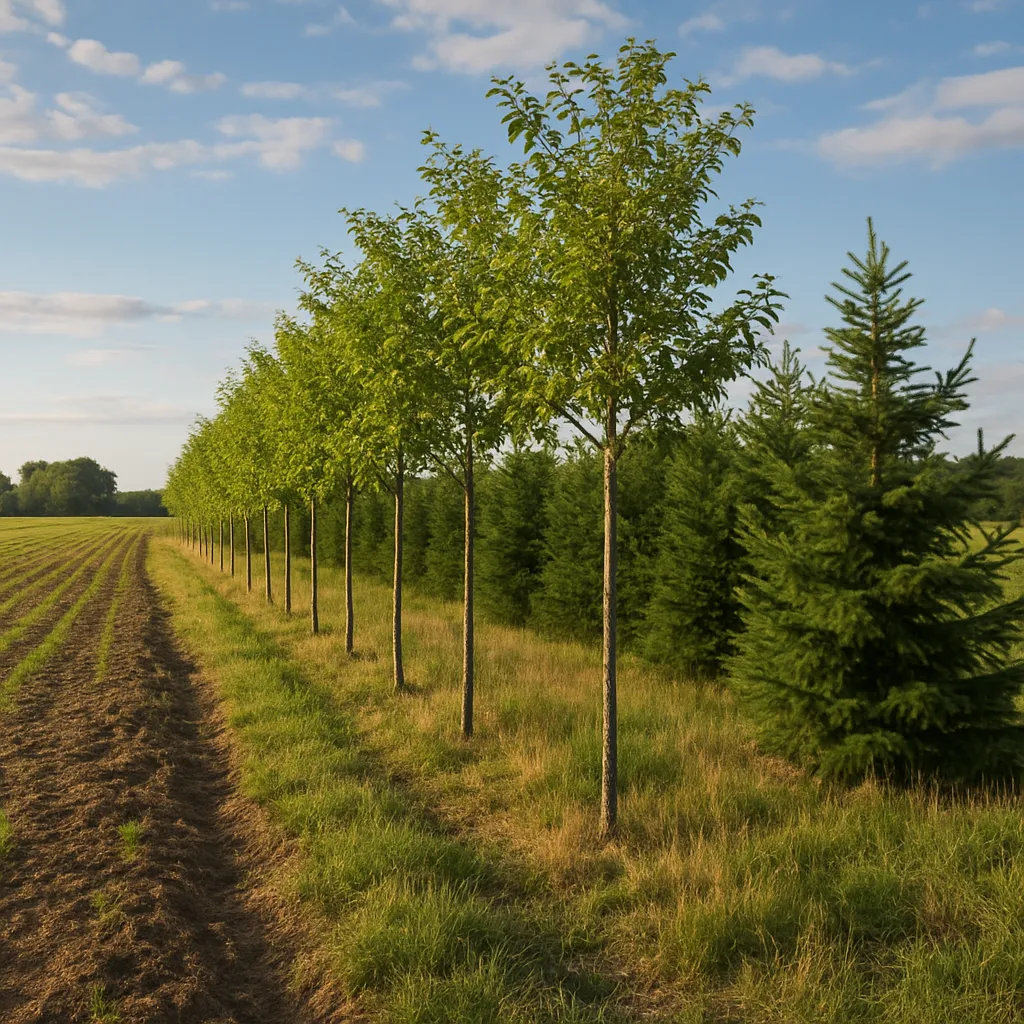
Imagine a north–south windbreak on an east–west field edge. Plant two rows of fast-growing pines up front, followed by two rows of hardy hardwoods, and finish with a row of shrubs closest to crops. This layered approach ensures early wind interception and sustained protection downfield.
Planting and Establishment Techniques
Proper planting techniques maximize survival rates and set the foundation for a robust windbreak. Soil preparation, correct planting depth, and post-planting care are crucial steps. Use mechanical augers for deep holes in compacted ground, and apply organic mulch to conserve soil moisture around young roots.
Step-by-Step Planting Guide
- Mark out planting lines with stakes and string
- Test soil pH and nutrient levels; amend with compost if needed
- Dig holes twice as wide as the root ball, but no deeper
- Backfill with native soil, firm gently to eliminate air pockets
- Install water retention rings or berms to direct moisture toward roots
- Apply a 5–10 cm layer of organic mulch, keeping it away from the stem base
Early Maintenance
During the first two years, monitor for weed competition and water stress. Use biodegradable weed mats to reduce manual weeding. Inspect for insect damage and treat outbreaks with integrated pest management practices rather than broad-spectrum chemicals. Support seedlings with stakes if high winds threaten to uproot them, and gently prune any broken branches.
Managing and Enhancing Ecosystem Services
Over time, a natural windbreak evolves into a multifunctional habitat. With proper management, it can enhance biodiversity, provide shelter for beneficial insects and pollinators, and even act as a corridor for wildlife. Incorporating understorey plantings and nesting boxes can elevate functional value beyond wind protection.
Understorey and Groundcover Strategies
- Native flowering perennials: attract pollinators and predatory insects
- Leguminous cover crops: fix nitrogen and improve soil fertility
- Native grasses: increase infiltration and reduce evapotranspiration losses
Integrating Wildlife-Friendly Features
Install birdhouses to encourage insect-eating species that help control pests. Create brush piles at the windbreak edges for small mammals and amphibians. Avoid excessive pruning so that dense thickets remain for nesting. A well-managed windbreak can become a hotspot for wildlife, turning previously uniform farmland into a dynamic ecological mosaic.
Long-Term Care and Adaptive Management
Windbreak systems require periodic attention to maintain their protective functions and ecosystem services. Conduct annual health assessments, checking for dead or diseased trees and gaps in the rows. Replace failed specimens promptly, and thin overcrowded stands after 10–15 years to prevent self-pruning of lower branches.
Pruning and Thinning Practices
- Remove diseased or damaged limbs close to the trunk
- Thin selectively to allow light penetration and air circulation
- Retain structural stability by avoiding T-shaped cuts that weaken trunks
Monitoring and Record-Keeping
Keep a log of planting dates, species performance, pest occurrences, and pruning schedules. Use simple mapping tools or smartphone apps to record gap locations. By tracking changes over time, you’ll be better equipped to make informed decisions about future enhancements or replacements.
Maximizing Agricultural Benefits
A well-established windbreak can boost crop yields, protect livestock, and cut heating costs in farm buildings. Reduced wind speeds lower the risk of crop lodging in cereals and minimize desiccation of young plants. In dairy and poultry operations, windbreaks help maintain comfortable temperatures and reduce stress-induced health issues.
- Crop yield improvement: up to 10% increase in sheltered zones
- Livestock comfort: decreased mortality and better weight gains
- Energy savings: decreased wind chill against barns and storage units
- Carbon sequestration: long-term storage of atmospheric CO2 in biomass
By following these guidelines, you’ll establish a resilient, multifunctional windbreak that safeguards your farmland and enriches the surrounding environment. A strategic combination of species, thoughtful layout, and attentive management transforms a simple shelterbelt into a cornerstone of sustainable agriculture.