Effective farm compost management enhances soil health, reduces waste, and supports sustainable agriculture. Farmers who adopt innovative compost strategies can improve crop yields while minimizing environmental impact. This article outlines essential practices for creating, maintaining, and utilizing compost on the farm.
Understanding Compost Fundamentals
Creating high-quality soil amendments begins with mastering the composting process. Successful management relies on balancing chemistry, biology, and physical structure. When you grasp these fundamentals, you will produce compost that offers maximum benefits to your fields.
Role of Microorganisms
Microbes are the engine of decomposition. Beneficial bacteria and fungi break down organic matter, transforming it into nutrient-rich humus. Ensuring a diverse microbial community accelerates breakdown and suppresses pathogens.
Nitrogen-to-Carbon Ratio
Maintaining an optimal Carbon (browns) to Nitrogen (greens) ratio is critical. A 25:1 to 30:1 carbon-to-nitrogen mix promotes rapid breakdown. Too much carbon slows decomposition; too much nitrogen creates odors and leaching.
Importance of Aeration and Moisture
- Oxygen: Keeps aerobic microbes active, preventing odors and harmful anaerobic byproducts.
- Moisture: Ideal moisture content is 50–60%. Too dry, and microbes become dormant; too wet, and oxygen is displaced.
Selecting and Preparing Compost Feedstocks
Diverse, high-quality feedstocks ensure a balanced nutrient profile. Choosing the right materials influences decomposition speed and final compost quality.
Green Materials
Greens supply Nitrogen and moisture. Common examples include:
- Vegetable scraps
- Manure from livestock (cow, horse, poultry)
- Fresh grass clippings
Brown Materials
Browns supply Carbon and structure. Key browns are:
- Dry leaves
- Straw or hay
- Wood chips and sawdust (in moderation)
Additional Amendments
Incorporate specialized additives to boost performance:
- Rock phosphate for phosphorus enrichment
- Kelp meal or seaweed for micronutrients
- Biochar to enhance soil structure and water retention
Constructing and Managing Compost Piles
Well-designed piles or bins facilitate decomposition, maximize microbial activity, and simplify management.
Site Selection
Pick a location with:
- Good drainage to avoid waterlogging
- Partial shade to moderate temperature extremes
- Easy access for machinery and water supply
Pile Formation
Layer materials for best results:
- Start with coarse browns (wood chips) for airflow.
- Add alternating layers of greens and browns, maintaining proper C:N ratio.
- Finish with a thin brown layer to reduce odors and pests.
Turning and Aeration
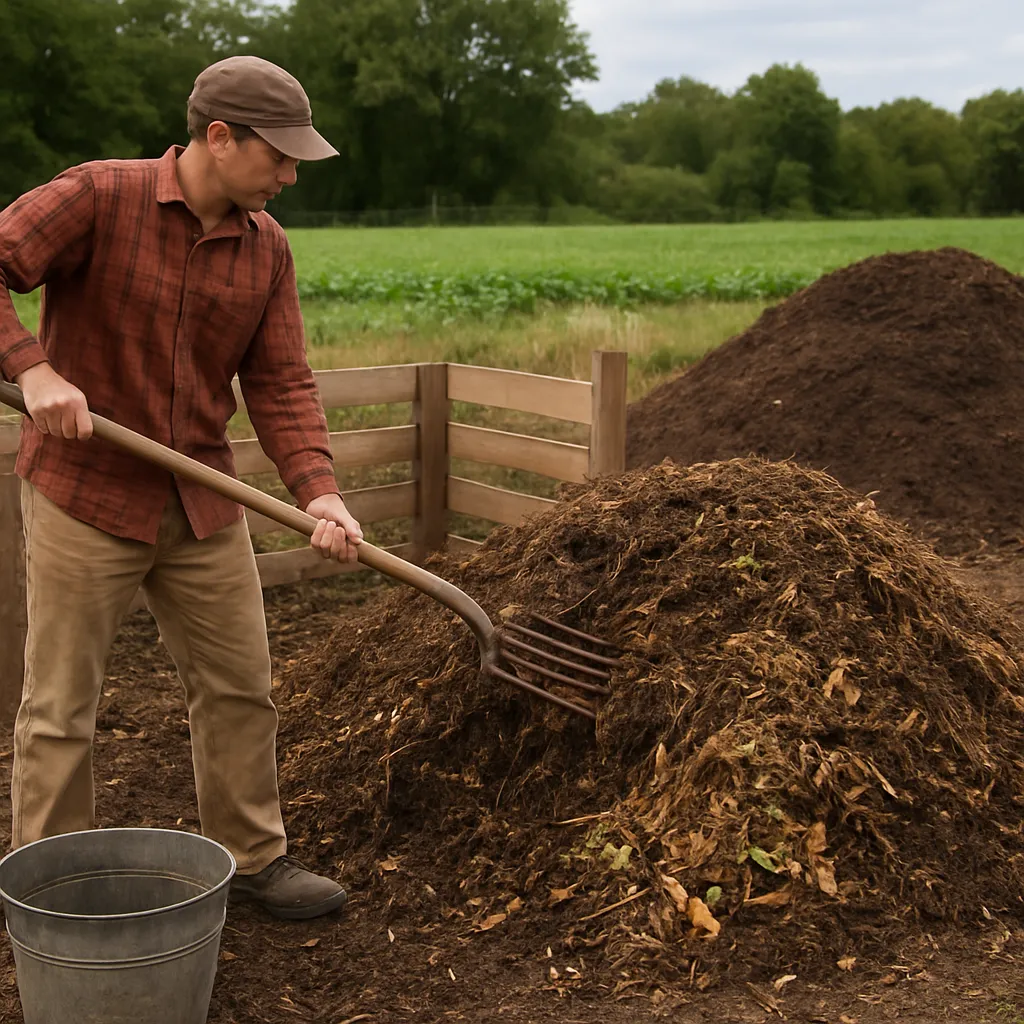
Regular turning every 1–2 weeks supplies oxygen and mixes materials. Use a front-end loader or pitchfork. One should monitor temperature: optimal range is 55–65°C (131–149°F). If temperatures exceed 70°C (158°F), pause turning until it cools slightly to preserve microbial diversity.
Monitoring Progress and Troubleshooting
Regular checks ensure the pile stays within ideal parameters, preventing setbacks and ensuring consistent quality.
Temperature Tracking
Use a compost thermometer to record center temperatures. A stable heat curve indicates active decomposition. A sudden decline signals lack of microbial activity or moisture issues.
Moisture Management
Check moisture by squeezing a handful of compost: it should feel like a wrung-out sponge. Too dry? Add water evenly or mix in fresh greens. Too wet? Turn more frequently and add dry browns.
Odor and Pest Control
Unpleasant smells often result from anaerobic pockets. Fix by turning and adding dry materials. To deter rodents and flies:
- Cover fresh additions with a layer of coarse browns.
- Mix in lime or diatomaceous earth if necessary.
Harvesting and Applying Finished Compost
Once compost is dark, crumbly, and earthy-smelling, it is ready for application. Proper timing and techniques determine its impact on crop health.
Screening and Curing
Pass finished compost through a mesh to remove large debris. Allow it to cure for 2–4 weeks in windrows; this stabilizes any remaining organic matter.
Field Application
Spread compost at rates of 5–15 tons per hectare depending on soil needs. Timing is crucial:
- Incorporate into soil before planting to improve structure and nutrient availability.
- Side-dress around growing plants to supply ongoing nutrients without root disturbance.
Benefits to Soil and Crops
Regular compost use leads to:
- Enhanced soil organic matter and microbial activity
- Improved water infiltration and retention
- Gradual release of nutrients, reducing fertilizer dependency
Integrating Compost into Sustainable Farming Systems
Compost management not only enriches soil but also plays a key role in holistic farm planning. By closing nutrient loops and reducing waste, farmers advance toward true sustainability.
Reduced Chemical Inputs
Healthy soils supported by compost require fewer synthetic fertilizers and pesticides, lowering costs and environmental risks.
Crop Rotation and Cover Crops
Integrate compost with rotation cycles. Follow heavy feeders like corn with legumes to fix additional nitrogen. Use cover crops to scavenge residual nutrients and protect soil during fallow periods.
On-Farm Carbon Sequestration
Well-managed compost systems lock carbon into stable soil organic matter. This practice contributes to climate change mitigation while boosting farm resilience.