Growing organic garlic presents an exciting opportunity for farmers seeking both sustainable practices and lucrative returns. This guide will walk you through every stage—from selecting the right garlic varieties to mastering harvesting techniques and marketing your yield for maximum profit. Implementing best practices ensures robust growth, superior flavor, and a high-value product that stands out in competitive markets.
Planning Optimal Growth Conditions
Climate and Site Selection
Garlic thrives in regions with distinct seasonal changes. A chill period is crucial for proper clove development and bulb enlargement. Ideal temperature ranges are between 32°F (0°C) during dormancy and 75°F (24°C) for active growth. Select a site with full sun exposure and good air circulation to minimize disease pressure.
Soil Preparation
Healthy soil is the foundation of an abundant garlic crop. Perform a soil test to determine pH and nutrient levels. Garlic prefers a slightly acidic to neutral pH (6.0–7.0). Amend heavy clay soils with coarse sand or organic peat moss to improve drainage. For sandy soils, incorporate well-rotted compost to boost water retention and nutrient content.
- Incorporate 2–4 inches of aged compost to enhance microbial activity.
- Add 1–2 pounds of balanced organic fertilizer (e.g., 5-5-5 NPK) per 100 square feet.
- Adjust pH with agricultural lime or sulfur based on soil test recommendations.
Variety Selection and Certification
Select certified disease-free seed stock to avoid nematodes, mold, and viral infections. Two main types are:
- Hardneck varieties, suited for colder climates; produce a central flower stalk and larger cloves.
- Softneck varieties, ideal for mild climates; have longer storage life and more cloves per bulb.
Choose varieties with strong market demand, such as ‘Rocambole’ for gourmet buyers or ‘California Early’ for winter markets.
Planting and Cultivation Techniques
Clove Selection and Preparation
Break bulbs into individual cloves just before planting. Discard small or damaged cloves to ensure uniform bulb size. Leave the papery skins intact to protect against rot. Soak cloves in a mild hydrogen peroxide solution (1 part 3% H₂O₂ to 10 parts water) for 5–10 minutes to reduce fungal pathogens.
Planting Schedule and Depth
Timing depends on local climate:
- Cooler Zones (USDA 3–6): Plant cloves 4–6 weeks before the first hard frost.
- Mild Winters (USDA 7–9): Plant in late fall or early winter for best results.
Space cloves 4–6 inches apart in rows 12–18 inches apart. Plant each clove pointy end up, 2 inches deep, then cover with soil. Applying a light layer of mulch immediately helps regulate temperature and moisture.
Pest and Disease Management
Organic control methods are essential for maintaining certification and soil health:
- Rotate crops on a 3–4 year cycle to prevent nematode and fungal buildup.
- Use floating row covers to deter onion thrips and leaf miners.
- Apply beneficial nematodes and microbial inoculants (e.g., mycorrhizae) to suppress soil-borne pathogens.
Mulching and Irrigation
Mulching with straw or leaf litter conserves moisture, suppresses weeds, and shields cloves from extreme temperatures. Maintain consistent soil moisture, especially during bulbing (late spring to early summer). Use drip irrigation systems to deliver water efficiently without wetting foliage, which can cause rot.
Harvesting, Curing, and Storage
Signs of Maturity
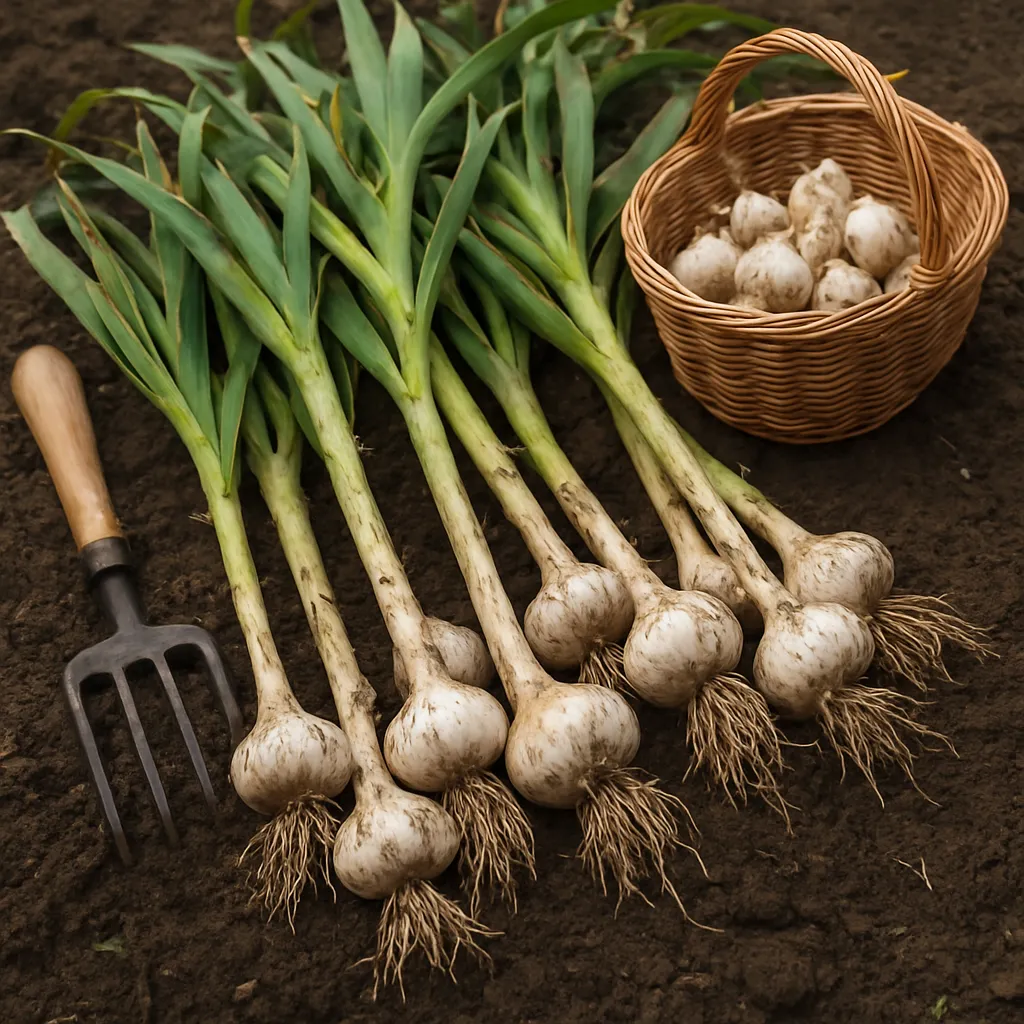
Monitor scape development on hardneck garlic. Remove scapes when they form tight coils to redirect energy into bulb growth. Begin harvest when 50–70% of lower leaves have yellowed but upper leaves remain green. Avoid overripe bulbs that will peel easily and suffer reduced storage life.
Harvest Techniques
Gently loosen soil around each bulb with a fork, taking care not to pierce the cloves. Lift bulbs by their necks or leaves, avoid dragging them across the ground, which causes bruising and disease entry points.
Curing Process
- Clean bulbs by removing excess soil but leave the outer skin intact.
- Hang garlic in well-ventilated, shaded areas at 80–90°F (27–32°C) with 50–60% humidity.
- Curing takes 3–4 weeks; bulbs are ready when necks are completely dry and skins are papery.
After curing, trim roots to ¼ inch and cut tops to 1–2 inches above the bulb for softneck. Store in mesh bags or braid softneck varieties for both storage and aesthetic marketing appeal.
Storage Conditions
Store garlic at 32–50°F (0–10°C) and 60–70% humidity. Under these conditions, most varieties will keep for 6–9 months. Avoid refrigeration, which can trigger premature sprouting.
Marketing Strategies for Maximum Profit
Building Your Brand
Distinguish your garlic with a unique brand story emphasizing its organic origins, local provenance, and sustainable methods. Develop attractive, informative labels highlighting variety name, flavor profile, and suggested culinary uses.
Direct-to-Consumer Sales
- Farmers’ Markets: High-visibility channels where you can educate buyers and offer samples.
- Community Supported Agriculture (CSA): Include garlic in seasonal boxes for pre-paid customers.
- Online Sales: Develop a simple e-commerce platform; advertise through social media and culinary blogs.
Wholesale and Value-Added Products
Partner with local restaurants, specialty grocers, and gourmet food stores. Supply bulk orders of braids, single bulbs, or peeled and minced garlic packaged in eco-friendly jars. Consider developing value-added items like garlic-infused oils or herb blends to diversify revenue streams.
Pricing and Cost Management
Calculate all production costs—seed cloves, soil amendments, labor, packaging, and certifications. Aim for a markup of 50–70% above cost to account for market fluctuations and unsold inventory. Monitor competitor prices and adjust seasonal rates accordingly. Offering tiered pricing (e.g., discounted bundles at markets) can incentivize bulk purchases and increase per-customer sales.
Sustainability and Certification
Maintaining your organic certification builds consumer trust. Keep meticulous records of seed sourcing, soil amendments, pest control measures, and harvest dates. Transparent practices strengthen buyer loyalty and justify premium pricing.