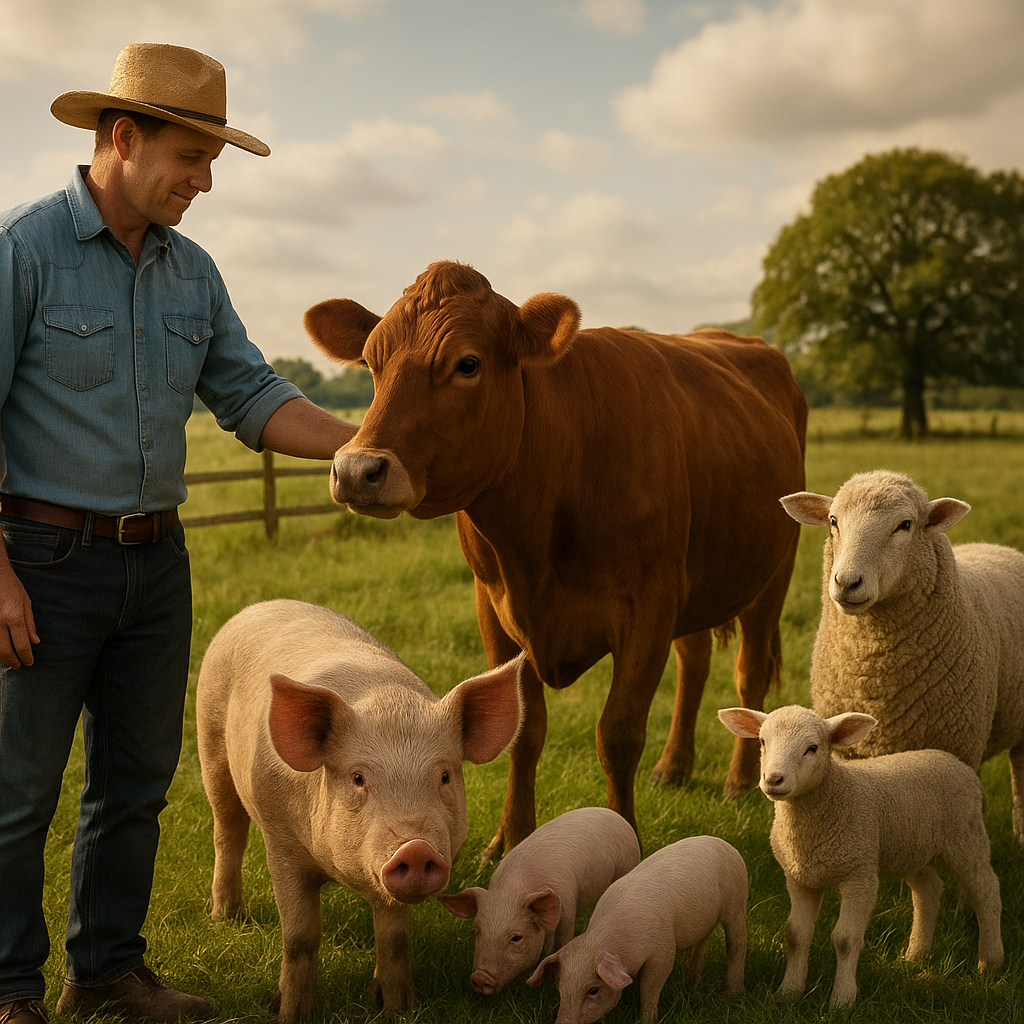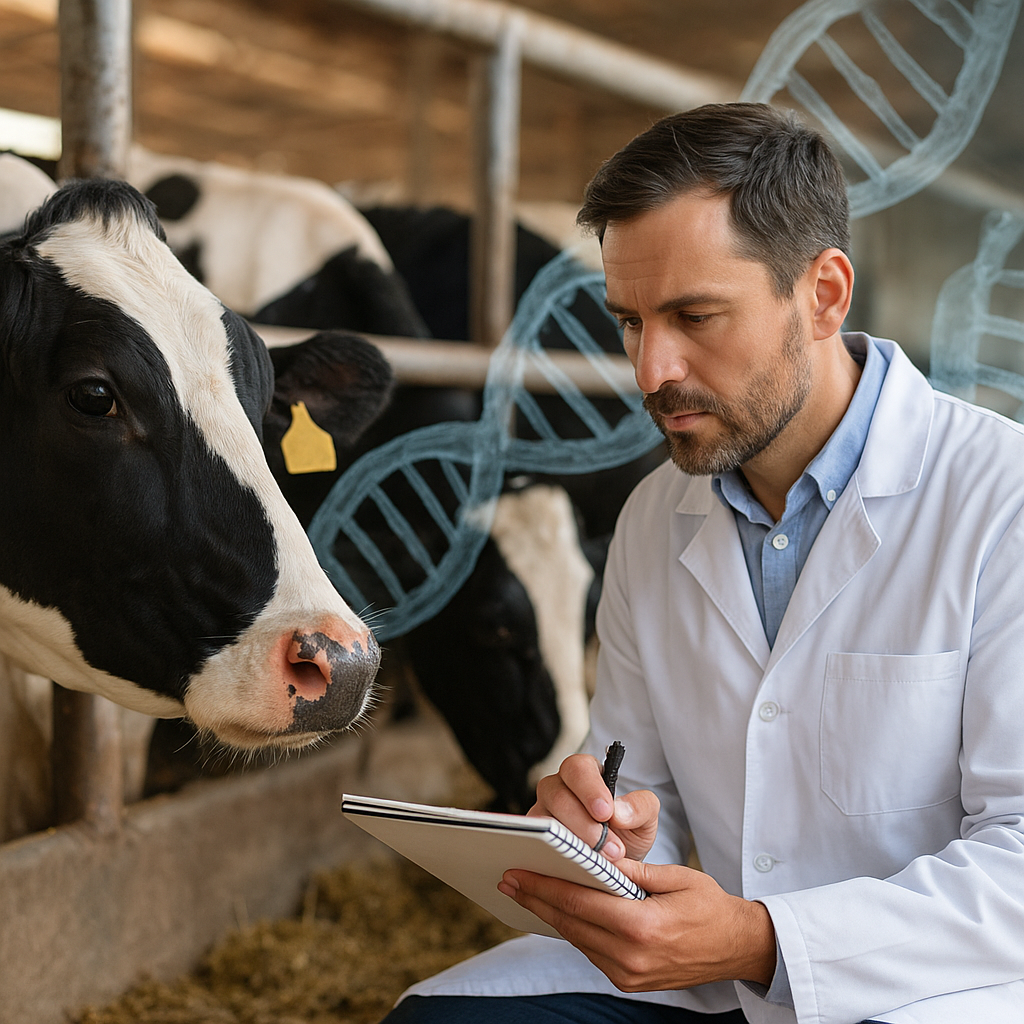
The integration of genetics into modern livestock breeding strategies has brought about a remarkable transformation in global agricultural systems. By unlocking the potential of individual DNA sequences and identifying superior traits, farmers and researchers can now accelerate genetic gains, optimize performance, and enhance overall herd health. This article examines the scientific foundations, cutting-edge methodologies, and practical applications driving the field forward, while also addressing emerging challenges and future prospects.
Genetic Fundamentals for Livestock Improvement
At the heart of any breeding program lies a deep understanding of the heritable components that determine an animal’s productivity and resilience. Key concepts include genome organization, additive genetic variance, and phenotyping accuracy. The genomic architecture of traits—ranging from milk yield in dairy cattle to growth rate in poultry—can be dissected by partitioning variance into genetic and environmental sources. A central goal is to maximize genetic progress per generation, which depends on selection intensity, accuracy of genetic predictions, genetic diversity, and generation interval.
Heritability estimates serve as a guide to how effectively producers can improve a trait through selection. For high-heritability traits such as mature body size, >50% of phenotypic variation is due to additive genetic effects. For low-heritability traits like fertility, genetic gains are slower, requiring record-keeping and advanced statistical models to detect genetic merit. Implementation of Best Linear Unbiased Prediction (BLUP) and other mixed-model approaches has been fundamental in providing EBVs (Estimated Breeding Values) for selection candidates.
Maintaining adequate genetic diversity is essential to avoid inbreeding depression and preserve long-term population health. Many breeding programs now track inbreeding coefficients using pedigree-based and genomic measures, ensuring that mating strategies balance genetic gain with conservation of unique alleles. Crossbreeding remains a widely used approach to harness heterosis, improving vigor, fertility, and disease resistance by combining complementary genetic pools.
Advances in quantitative genetics have introduced the concept of selection indices, where multiple traits are weighted according to economic or sustainability criteria. Rather than focusing solely on single-trait improvement, integrated indices allow producers to achieve balanced progress across milk quality, carcass yield, feed efficiency, and environmental footprint. These indices leverage molecular and pedigree data to predict breeding values with enhanced precision.
Advances in Genomic Technologies
Recent years have witnessed a revolution in genomic tools, rapidly reducing the cost and time required to generate dense DNA profiles. High-throughput SNP (Single Nucleotide Polymorphism) chips now capture tens to hundreds of thousands of markers across the genome, enabling genome-wide association studies (GWAS) to pinpoint loci affecting economically important traits. This genomic information feeds directly into genomic selection programs, which predict breeding values based on genome-wide marker effects rather than pedigree alone.
Whole-genome sequencing has further enriched our understanding of functional variants, such as nonsynonymous SNPs and structural rearrangements that dramatically influence trait expression. As a result, researchers can design breed-specific panels that focus on causal mutations associated with disease resistance, feed conversion, and product quality.
Gene Editing and CRISPR Applications
CRISPR-based gene editing represents a paradigm shift, allowing precise modification of specific genomic loci. Far beyond traditional selection, CRISPR enables introduction, deletion, or correction of alleles to confer desirable characteristics such as increased muscle mass, improved immunity, or reduced environmental emissions. Experimental studies in pigs, cattle, and poultry are exploring the feasibility of editing genes linked to porcine respiratory disease, bovine tuberculosis resistance, and heat tolerance in laying hens.
Emergence of Epigenomic Regulation
Beyond DNA sequence, epigenetic factors—such as DNA methylation and histone modifications—influence gene expression patterns. Understanding how epigenomic marks respond to nutrition, stress, and management practices offers additional levers to guide trait performance across generations. Although still in early stages, epigenetic selection could complement genomic selection by capturing non-Mendelian inheritance patterns that affect sustainability and welfare.
Implementation in Livestock Production Systems
Translating genetic discoveries into on-farm improvements requires a robust framework for data collection, analysis, and decision-making. Digital phenotyping platforms equipped with sensors, imaging devices, and automated scales collect high-resolution data on growth, feed intake, locomotion, and health events. Combining sensor data with genomic predictions enhances selection accuracy and enables real-time monitoring of breeding stock.
Breeders often employ structured mating plans that incorporate computerized mate selection tools. These platforms integrate EBVs, inbreeding limits, and economic weights to generate optimal pairings. The key components of an effective breeding infrastructure include:
- Comprehensive herd recording and database management
- Routine genotyping using cost-effective marker panels
- Statistical pipelines for genomic evaluation
- Connectivity between field data and central breeding offices
- Continuous training of farm personnel in genetic principles
International collaborations, such as interbreed data sharing and joint reference populations, further accelerate genetic progress by expanding the pool of genotyped animals. This global approach reduces industry fragmentation and fosters the exchange of best practices.
Real-world applications demonstrate significant gains: Holstein dairy cattle lines with genomic selection exhibit a 25–30% lift in genetic gain for milk production compared to pedigree-based programs. In swine, marker-assisted introgression of disease-resistance alleles reduces veterinary costs and improves animal welfare. Poultry breeding companies leverage genomic information to develop heat-tolerant broiler lines, addressing climate resilience challenges.
Challenges and Future Directions
Despite remarkable achievements, the field faces technical, ethical, and regulatory hurdles. Data privacy concerns arise when sharing proprietary genomic datasets. Regulatory frameworks for gene-edited animals vary by region, with some markets imposing strict labeling or approval processes. Public perception of biotechnology remains mixed, necessitating transparent communication about risks and benefits.
Climate change presents a growing imperative to breed animals capable of thriving under heat stress, water scarcity, and novel disease pressures. Breeding for sustainability is no longer optional; it demands selection targets that minimize greenhouse gas emissions, enhance nutrient utilization, and improve resource-use efficiency. Integrating environmental impact metrics into selection indices will be critical in the coming decade.
Emerging computational methods, such as machine learning and artificial intelligence, promise to refine predictive models by capturing complex gene–environment interactions. Deep learning algorithms can analyze large-scale multi-omics datasets—combining genomics, transcriptomics, and metabolomics—to identify biomarkers for robust health and productivity. The synergy between advanced analytics and precise genomic tools will define next-generation breeding strategies.
Ultimately, fostering a sustainable and productive livestock sector will depend on multidisciplinary collaboration among geneticists, veterinarians, nutritionists, engineers, and policymakers. By harmonizing technological innovation with ethical stewardship, the industry can deliver resilient animal populations that meet global demands for high-quality protein while preserving ecological integrity.