Proper management of agricultural landscapes requires a deep understanding of how excess nutrients travel from fields into waterways. Unchecked nutrient movement can lead to algae blooms, fish kills, and long-term damage to ecosystems. Farmers who adopt integrated approaches can safeguard both their yields and the environment. The following sections explore key aspects of reducing losses and maintaining healthy farms and watersheds.
Understanding the Mechanics of Nutrient Runoff
When rainfall or irrigation water moves across a field, it can carry with it dissolved fertilizers and soil particles rich in phosphorus and nitrogen. This process, commonly referred to as nutrient runoff, is driven by:
- Excessive rainfall intensity or improper irrigation scheduling.
- Steep slopes and compacted soils that accelerate water flow.
- High application rates of fertilizers without corresponding crop uptake.
- Lack of protective plant cover exposing bare soil to erosion.
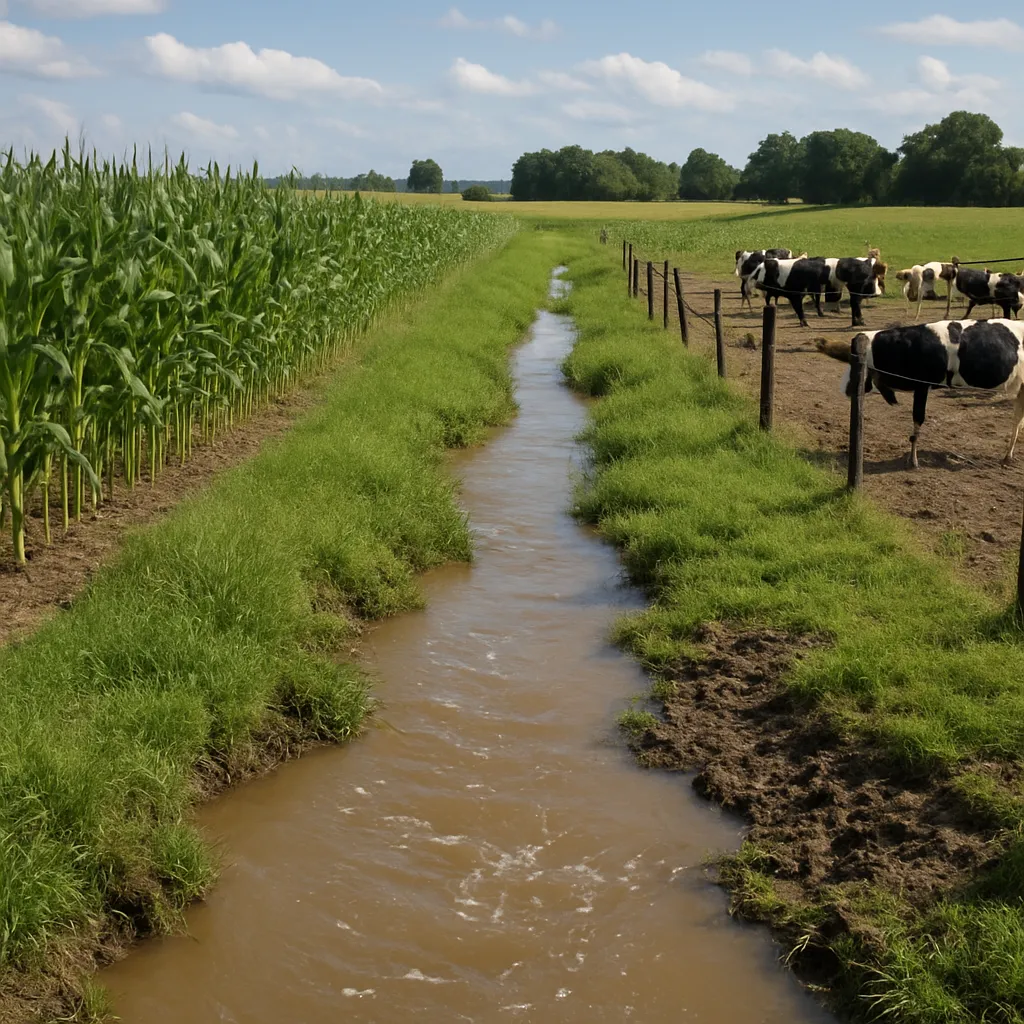
Soils experiencing soil erosion lose their fine particles, which often bind phosphorus and organic matter. As these particles wash away, they act as carriers, transporting nutrients into roadside ditches and streams. Over time, sediment accumulation can alter stream channels, reduce flood capacity, and degrade water quality downstream.
Key Factors Influencing Runoff
- Soil texture and structure: sandy soils drain quickly but may leach nutrients; clayey soils hold water but can generate more surface flow when saturated.
- Crop residue and mulch presence: fields with substantial residue intercept raindrops, reducing splash erosion.
- Field topography: concave areas tend to concentrate flow, increasing localized nutrient transport.
- Vegetation type: deep-rooted plants improve infiltration, while shallow-rooted systems may promote overland flow.
Strategies to Prevent Runoff on Farms
Implementing a diverse toolkit can dramatically cut nutrient losses. Combining structural and agronomic measures ensures better protection against variable weather and soil conditions.
Preventive Agronomic Practices
- Cover crops: Planting rye, clover, or radish in winter fills nutrient uptake gaps, scavenges leftover nitrogen, and improves soil organic matter.
- Reduced-tillage systems: Minimizing soil disturbance preserves structure, enhances infiltration, and keeps residues on the surface as a protective layer.
- Crop rotation: Alternating cereals with legumes or deep-rooted broadleaf species balances nutrient cycles and breaks pest and disease cycles.
- Proper nutrient placement: Banding fertilizers near seed rows can match supply with demand, reducing overall application rates.
Structural Controls
- Buffer strips: Establishing grass or riparian buffers along waterways traps sediment and takes up nutrients before they reach open water.
- Retention ponds: Constructed depressions slow incoming runoff, allowing sediments and dissolved nutrients to settle out.
- Vegetative barriers: Narrow rows of perennial grasses or shrubs installed across slopes intercept flow, dissipate energy, and trap sediments.
- Terracing and contour farming: Shaping the land along elevation contours reduces slope length and flow velocity.
By integrating both agronomic and structural tactics, farms can maintain productivity while minimizing environmental footprints. Each approach addresses specific pathways through which nutrients leave the field.
Implementing Sustainable Practices and Monitoring
Coupling best management practices with regular assessment ensures continuous improvement. A proactive farmer establishes feedback loops for decision-making, adapts to changing conditions, and documents results.
Data-Driven Nutrient Management
- Soil testing: Conducting routine analyses for pH, organic matter, and nutrient levels guides precise fertilizer applications.
- Nutrient budgeting: Calculating inputs and outputs over a growing season highlights surpluses or deficits, enabling adjustments in future plans.
- Precision agriculture tools: GPS-guided equipment and variable-rate technology apply fertilizers only where needed, reducing overlap and waste.
- Use of decision-support software: Models predict runoff risk based on real-time weather forecasts, soil moisture, and slope data.
Ongoing Monitoring and Adaptation
- Water sampling: Regular testing of drainage ditches or tile outlets measures nutrient concentrations, indicating the effectiveness of implemented practices.
- Remote sensing: Drone or satellite imagery assesses vegetation cover and soil moisture hotspots, guiding targeted interventions.
- Record keeping: Maintaining logs of fertilizer types, application dates, and rates helps trace back any anomalies in runoff patterns.
- Peer networks and extension services: Farmers benefit from local workshops, field days, and cooperative research to share successes and lessons learned.
Integrating advanced monitoring techniques into everyday management fosters a culture of continuous improvement. This approach supports both economic viability and environmental stewardship, hallmarks of a robust sustainable farming system.
Economic and Environmental Benefits
Reducing nutrient runoff not only protects downstream ecosystems but also preserves on-farm resources. By capturing more applied nutrients within the root zone, farmers can expect:
- Reduced fertilizer costs when nutrient use efficiency improves.
- Enhanced soil health through increased organic matter and microbial activity.
- Greater resilience to drought and heavy rainfall due to improved soil structure.
- Positive public perception and potential access to environmental incentive programs.
Well-managed runoff systems translate into healthier crops, cleaner water, and stronger farm finances—illustrating that proactive stewardship yields returns far beyond the field edge.