Farmers play a pivotal role in conserving wildlife while maintaining productive agricultural operations. By strategically integrating habitat features into your fields and pastures, you can enhance biodiversity, improve soil health, and support essential ecosystem services. This guide explores practical steps to transform ordinary farm landscapes into thriving sanctuaries for native birds, insects, small mammals, and amphibians. Through careful planning, thoughtful design, and ongoing management, you can foster resilient populations of pollinators and beneficial predators while boosting the overall sustainability of your land.
Assessing Your Farm’s Potential
Understanding Your Landscape
Before making any changes, conduct a thorough assessment of your property’s physical features. Take note of field boundaries, watercourses, existing woodlots, and contour lines. Mapping these elements helps you pinpoint areas where introducing buffer strips or hedgerows will yield the greatest ecological benefit without compromising crop yields. Topography influences water runoff and soil erosion, so consider how adding grassed waterways or riparian buffers can control sediment and enhance water resources for wildlife.
Identifying Native Species
Compile a list of indigenous plants and animals that naturally occur in your region. This inventory guides habitat enhancements by matching species’ requirements to site conditions. For example, if your farm lies within a grassland ecoregion, prioritize native warm-season grasses and wildflowers to support ground-nesting birds and native bees. Conversely, in forested zones, focus on establishing understory shrubs and mast-producing trees to attract songbirds and small mammals. Partner with local wildlife agencies or extension services to obtain species checklists and recommended seed mixes that bolster habitat connectivity.
Setting Conservation Goals
Define clear, measurable objectives such as increasing nesting sites for barn owls, establishing pollinator corridors, or reducing pesticide dependence. These goals will inform your timeline and budget, and they enable you to track progress over multiple seasons. A well-structured plan should specify acreage targets, planting schedules, and criteria for success. Incorporate both long-term aspirations—like developing woodland patches—and short-term milestones—such as planting a demonstration pollinator strip this spring.
Designing and Establishing Habitat Features
Creating Shelter and Nesting Sites
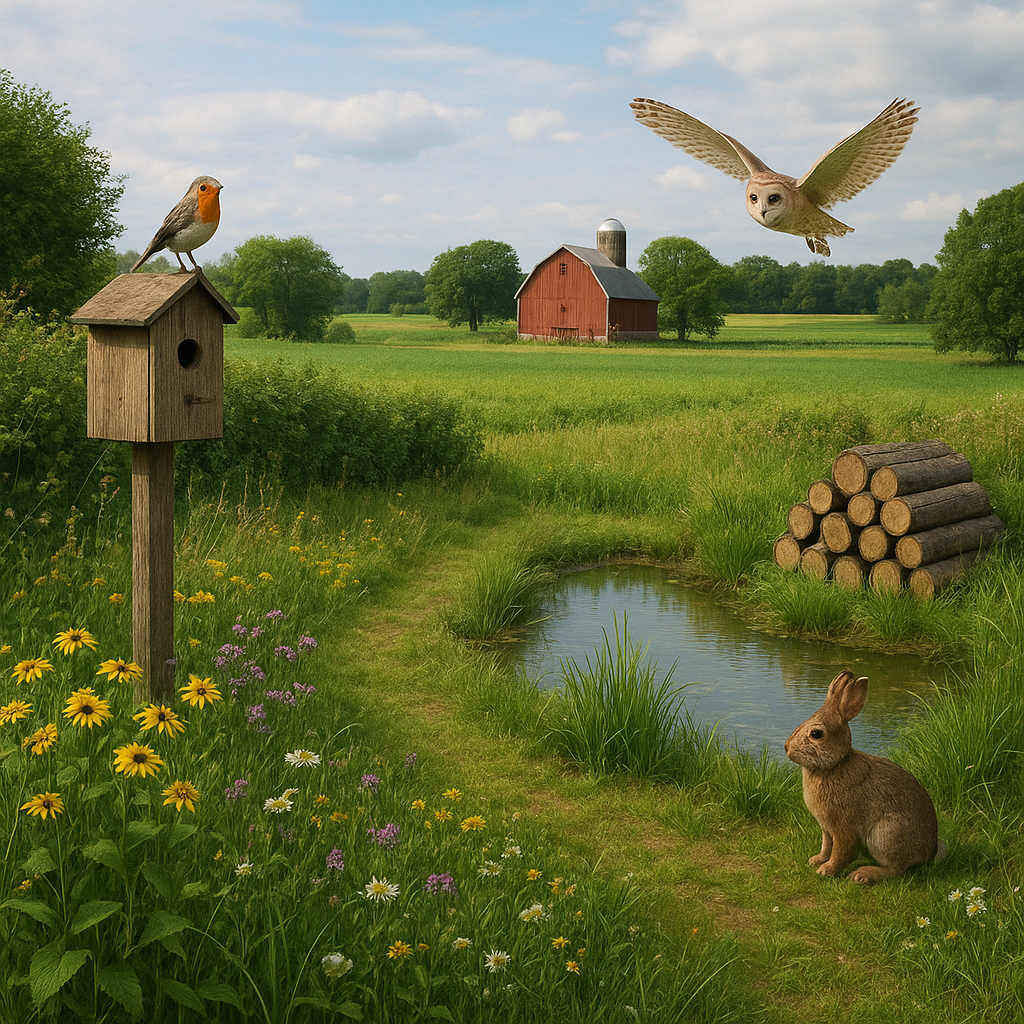
Wildlife requires cover for nesting, roosting, and protection from predators. Construct bird boxes tailored to species like bluebirds, swallows, or barn owls. Group boxes at varying heights to cater to diverse cavity-nesting birds. Install brush piles composed of pruned branches and woody debris in secluded corners to offer refuges for small mammals and reptiles. If you have open pastures, erect fence-post perches for raptors, giving them vantage points to hunt rodents and reduce crop losses naturally.
Providing Sustainable Water Resources
Reliable water sources are critical, especially in arid regions or during hot summers. Create small ponds or install solar-powered wildlife drinkers to supply quenching stations for deer, rabbits, and amphibians. Line pond edges with native emergent plants like cattails and sedges to stabilize banks and filter contaminants. For seasonal pools, ensure shallow margins for amphibian egg laying. By designing water features that mimic natural wetlands, you’ll attract a broader range of species while improving onsite ecosystem functions.
Promoting Native Vegetation Growth
Native plants provide superior forage and cover compared to invasive or ornamental species. Establish mixed-species seedings of perennial wildflowers and grasses to form pollinator strips between crop rows. These strips offer nectar and pollen from spring through fall, supporting bees, butterflies, and hummingbirds. In upland areas, sow native legumes to fix nitrogen and enhance soil fertility. Edge-of-field plantings with shrubs like elderberry or dogwood yield berries for songbirds and structure for nesting. Consistent weed control—through mowing at optimal heights or targeted grazing—ensures desired plant communities prevail.
Maintaining and Monitoring Wildlife Habitats
Monitoring Biodiversity and Wildlife Activity
Regular surveys inform you whether habitat enhancements meet ecological goals. Use trail cameras, bird counts, and pitfall traps to document species presence and abundance. Record observations in a logbook, noting dates, weather conditions, and habitat changes. Compare data across years to detect trends in wildlife populations. Citizen science platforms can supplement your records and foster community engagement. Engaging local volunteers for periodic birdwatching events or amphibian call surveys raises awareness and provides valuable data.
Adaptive Management Practices
Habitats are dynamic; what works one season may need adjustment the next. If invasive species encroach on pollinator strips, implement spot treatments or reseed native mixes. Observe nesting boxes annually—clean out debris and ensure proper functioning. Water features may require sediment removal to maintain depth and water quality. By remaining flexible and responsive, you can refine management techniques to maximize ecological returns while avoiding unintended consequences.
Balancing Agriculture and Conservation
Integrating wildlife habitat into a working farm demands careful balance. Use rotational grazing to prevent overbrowsing of pasture-edge plantings. Employ integrated pest management (IPM) to reduce reliance on broad-spectrum insecticides that harm beneficial insects. Crop rotations that include field peas or clover bolster soil fertility and provide summer forage for pollinators. Establish setback zones where machinery traffic is limited, protecting delicate riparian buffers. These practices promote harmonious coexistence between productive fields and robust wildlife communities.
Key Recommendations
- Map and prioritize areas for habitat enhancements.
- Plant native species tailored to local ecosystems.
- Provide year-round water and shelter resources.
- Monitor wildlife and adapt management regularly.
- Integrate conservation with sustainable farming techniques.