The hidden world beneath our feet is teeming with life. This vibrant ecosystem, driven by microbes, plays a critical role in maintaining soil fertility. From decomposing organic residues to forming symbiotic partnerships with plant roots, these microscopic organisms orchestrate processes that determine crop health and productivity. Understanding their functions can unlock new pathways to sustainable sustainability in agriculture.
Microbial Diversity and Soil Structure
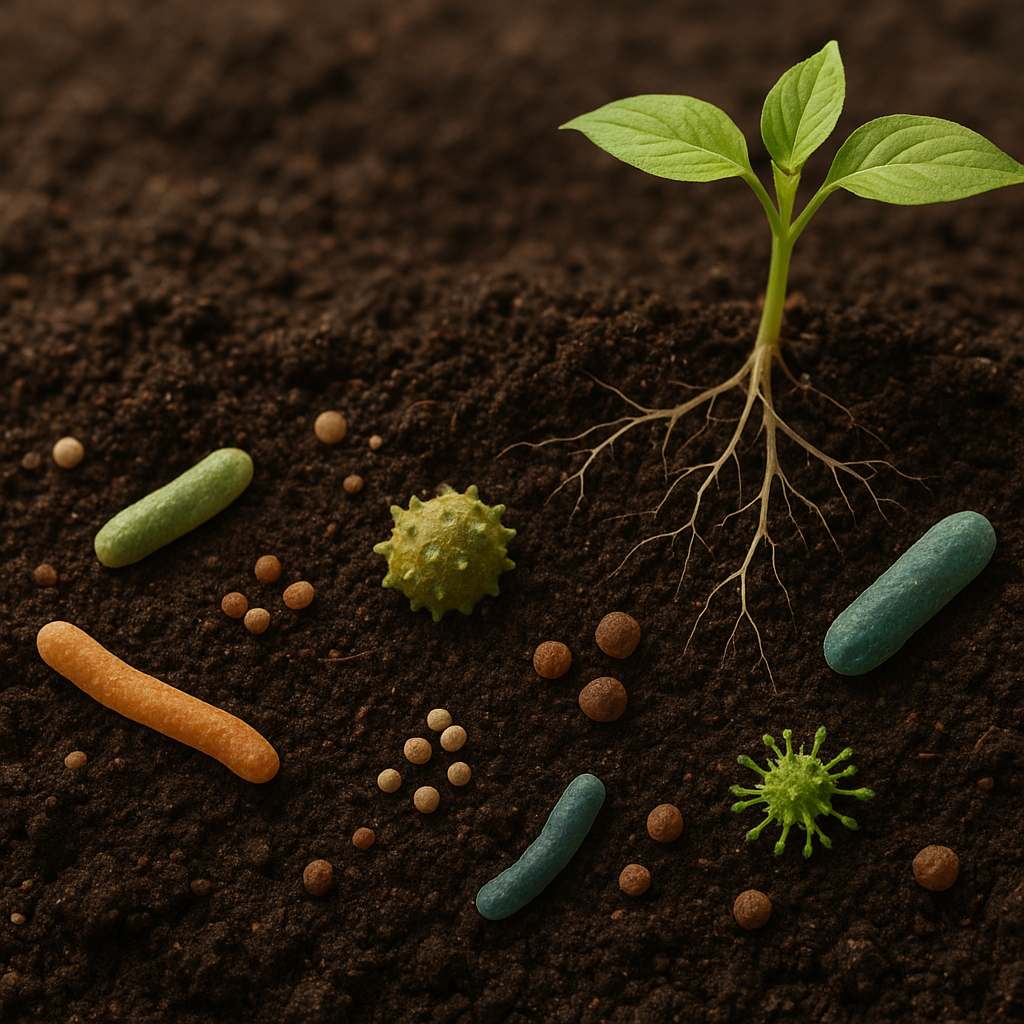
Soil is home to an astonishing variety of organisms, including bacteria, fungi, protozoa, algae and nematodes. Among these, bacteria and fungi are the powerhouses of nutrient transformations and soil aggregation. A diverse microbial community enhances the physical and chemical properties of soil, creating stable aggregates that improve aeration, water retention and root penetration. As a result, soils rich in microbial life tend to resist erosion and maintain fertility over successive growing seasons.
Major Groups of Soil Microorganisms
- Bacteria: Single-celled organisms responsible for key steps in nutrient cycling, such as nitrification and denitrification. Some species produce extracellular polysaccharides that bind soil particles into aggregates.
- Fungi: From filamentous saprophytes to beneficial mycorrhizal partners, fungi decompose complex organic compounds like lignin and cellulose, contributing to the formation of humus and long-term organic matter storage.
- Actinomycetes: Filamentous bacteria that bridge the functional gap between bacteria and fungi. They produce antibiotics and break down recalcitrant organic compounds, maintaining soil health and suppressing pathogens.
- Protozoa and nematodes: Predators of bacteria that help regulate bacterial populations and release nitrogen in plant-available forms.
Nutrient Cycling and Plant Nutrition
The productivity of agricultural systems hinges on efficient cycling of elements like nitrogen, phosphorus and carbon. In well-structured soils, microbial consortia carry out distinct biochemical processes that transform nutrients into forms accessible to plant roots. By fostering active microbial communities, farmers can reduce dependency on synthetic inputs and improve long-term agroecosystem resilience.
Role in the Nitrogen Cycle
Biological nitrogen fixation converts atmospheric N₂ into ammonia via specialized bacteria, including free-living genera like Azotobacter and symbiotic rhizobia. Nitrifying bacteria such as Nitrosomonas and Nitrobacter then oxidize ammonia to nitrate, a form readily absorbed by plants. Denitrifying bacteria complete the cycle by returning nitrogen to the atmosphere under anaerobic conditions. Balancing these processes minimizes leaching losses and greenhouse gas emissions.
Decomposition of Organic Matter
Microbes break down crop residues, manure and green manure in a sequential process: simple sugars and proteins are consumed first, followed by structural polymers like cellulose and lignin. This biosynthesis of humic substances enhances cation exchange capacity and nutrient retention. A healthy detrital food web of bacteria, fungi, earthworms and arthropods accelerates decomposition, releasing a steady supply of essential elements.
Symbiotic Relationships and Plant Growth Promotion
Beyond nutrient turnover, many soil microorganisms engage in close partnerships with plants. These symbioses boost nutrient acquisition, stress tolerance and disease resistance. By leveraging natural alliances, farmers can harness biological strategies to optimize crop yields and resilience under challenging environmental conditions.
Mycorrhizal Associations
Mycorrhizae are mutualistic associations between plant roots and fungal hyphae. The fungus extends the root’s absorptive network, exploring larger soil volumes for phosphorus, micronutrients and water. In return, plants supply carbohydrates to the fungal partner. Arbuscular mycorrhizal fungi (AMF) colonize the roots of most crops, improving nutrient uptake efficiency, soil aggregation and tolerance to drought and salinity.
Rhizobia and Biological Nitrogen Fixation
Leguminous crops form nodules on their roots where rhizobia bacteria reside. Inside these nodules, rhizobia fix nitrogen in exchange for plant-derived sugars. This natural nitrogen fixation can supply up to 200 kg of N per hectare annually, reducing the need for synthetic fertilizers and lowering production costs for farmers.
Applications in Sustainable Agriculture
Modern farming embraces microbial technologies to enhance soil health and reduce environmental footprints. By integrating microbial management with cultural practices, producers can achieve productive and resilient cropping systems that support long-term soil function.
Microbial Inoculants and Biofertilizers
Commercial inoculants containing mycorrhizal spores, rhizobia or plant growth-promoting bacteria (PGPB) are increasingly adopted. PGPB such as Bacillus and Pseudomonas strains produce phytohormones (auxins, cytokinins), solubilize phosphorus and suppress pathogens. Proper selection, delivery and timing of inoculants ensure successful establishment and maximize benefits.
Enhancing Soil Health through Crop Rotation
Rotating cereals with legumes or cover crops introduces diversity into the soil ecosystem. Legumes enrich nitrogen stocks, while deep-rooted cover crops break compacted layers and exude compounds that feed beneficial rhizosphere microbes. Alternating crops interrupts pest and disease cycles and stimulates a broad spectrum of microbial functions, reinforcing overall soil fertility.
Innovation and Future Directions
Cutting-edge research uses metagenomics and metabolomics to unravel the complexity of soil microbial networks. These tools identify keystone species and functional genes that drive resilience under stressors such as drought, salinity and climate variability. Precision agriculture platforms that integrate soil sensor data with microbial indicators promise tailored interventions, optimizing resource use and yield outcomes.
Precision Biostimulant Applications
Tailored biostimulants deliver specific microbial consortia or metabolites at critical crop stages. By monitoring microbial activity through soil tests or remote sensing, farmers apply treatments only when and where needed. This approach conserves inputs and aligns with regenerative agriculture goals.
Engineering Microbial Consortia
Synthetic ecology explores the design of stable microbial communities with complementary functions—nitrogen fixation, phosphorus solubilization, pathogen suppression. Field trials of these consortia demonstrate synergies that outperform single-strain inoculants, paving the way for next-generation biofertilizers.