Precision agriculture represents a transformative approach to farming, harnessing cutting-edge tools to enhance resource management and crop production. By integrating advanced equipment, real-time monitoring, and sophisticated algorithms, farmers can achieve unprecedented levels of efficiency and maximize yield while minimizing environmental impact. This article explores the evolution of modern farming practices, detailing the core components, data-driven strategies, and the challenges faced by growers as they adopt precision techniques.
Adoption of Advanced Technology
Modern farms are increasingly outfitted with a diverse array of machinery and digital platforms designed to gather, process, and act on field information. Embracing technology in agriculture has become essential for maintaining competitiveness and meeting rising food demands. Early adopters of precision tools report substantial improvements in input utilization, with reductions in fertilizer, water, and pesticide usage.
Global Trends
Across North America, Europe, and parts of Asia, the shift toward precision practices is driven by government incentives and private investment. Large-scale operations leverage satellite-based mapping and variable-rate controllers, while smallholders utilize smartphone apps to access weather data and soil analyses. Collaborative research programs are now standard, fostering innovation and disseminating best practices to remote regions.
Key Equipment
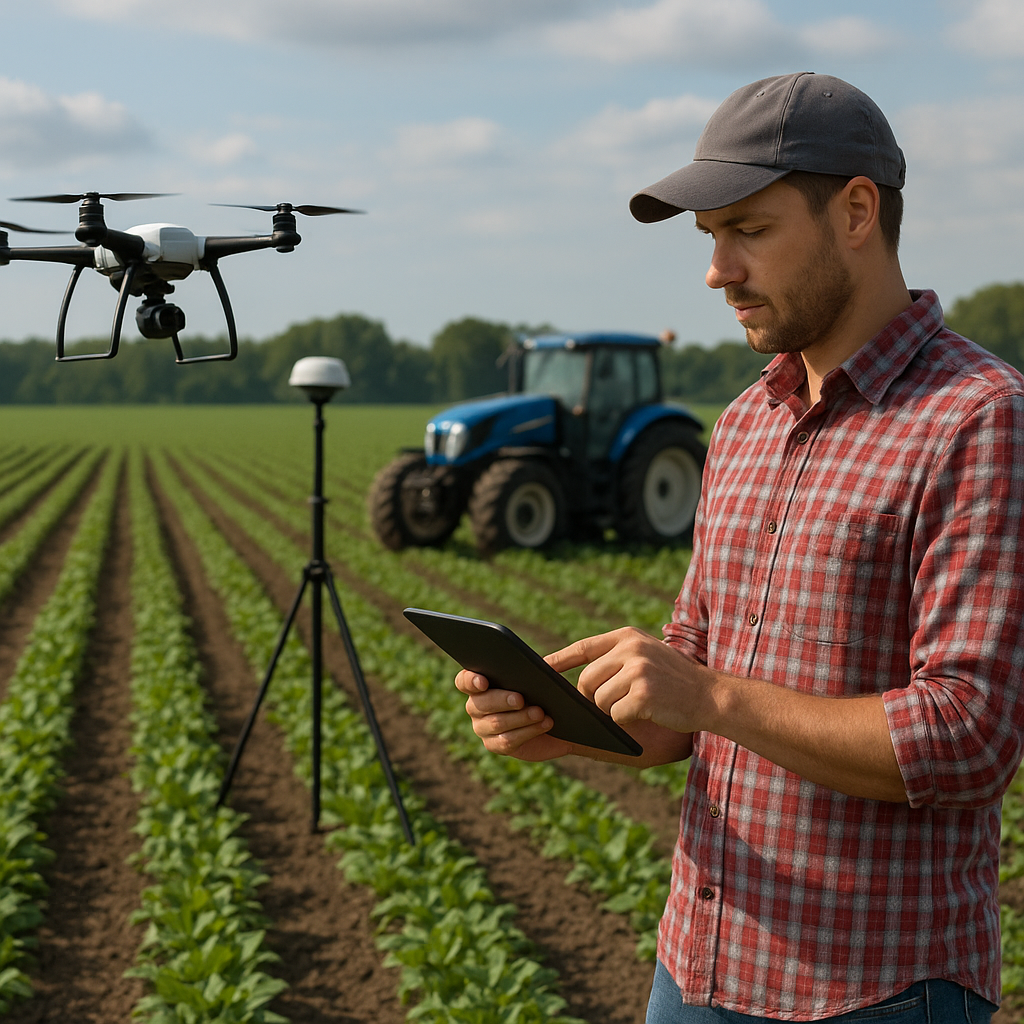
- Tractors equipped with GPS guidance systems, enabling accurate field navigation.
- Self-steering combines that optimize travel paths to avoid overlap and reduce soil compaction.
- Fertilizer spreaders with variable-rate technology, adjusting nutrient application on the fly.
- Unmanned aerial vehicles (UAVs) and drones for aerial imaging and crop scouting.
- Automated irrigation units that adapt flow rates based on moisture sensors.
Data Collection and Analysis Techniques
Accurate and timely information lies at the heart of precision farming. The process involves systematic data gathering, robust interpretation, and actionable insights that drive field operations. By combining multiple data streams, farmers can build a detailed portrait of soil health, crop development, and environmental conditions.
Sensors and IoT Devices
Deployment of sensors in the field has revolutionized continuous monitoring. Soil moisture probes, nutrient detectors, and weather stations feed real-time readings into central platforms. These devices detect variations within microzones and alert managers to emerging stressors before visible symptoms appear. Integration with cloud services ensures data storage and accessibility from any location.
Yield Mapping
Harvesters equipped with flow monitors and GPS receivers generate detailed yield maps. These spatial representations show productivity patterns across each acre, highlighting high-performing areas and zones requiring remediation. Yield mapping underpins decisions on crop rotation, soil amendment, and targeted scouting, fostering a cycle of ongoing improvement.
Data-Driven Decision Making
Consolidating information from sensors, yield monitors, and satellite imagery allows for data-driven strategies. Analytical models can predict the optimal timing for planting, irrigation, and pest management. Farmers use decision-support software to simulate scenarios and evaluate trade-offs, ensuring that every intervention is both cost-effective and environmentally responsible.
Implementation Challenges and Future Outlook
While the benefits of precision agriculture are clear, implementation comes with hurdles that vary by region and scale. Addressing these challenges is critical for sustaining growth and closing the gap between technology potential and real-world results.
Economic Considerations
Initial investment costs for hardware, software subscriptions, and training can be significant. Small and mid-sized farms may struggle to justify these expenditures without clear short-term returns. Leasing options, cooperative purchasing agreements, and government grants help offset expenses. As the cost of sensors and controllers declines, adoption rates are expected to rise.
Environmental Impact
Adopting precision methods offers substantial gains in sustainability. By tailoring input rates to actual needs, farmers reduce runoff, curb greenhouse gas emissions, and protect local ecosystems. Conservation tillage combined with precision planting preserves soil structure and biodiversity, reinforcing long-term land productivity.
Automation and Robotics
Advances in automation are reshaping labor dynamics on the farm. Autonomous vehicles performing repetitive tasks—such as weeding, planting, and spraying—free operators for more strategic roles. While automated solutions promise labor savings and increased uptime, they also require new skill sets and comprehensive maintenance protocols.
Future Innovations
Emerging technologies, including artificial intelligence, machine learning, and advanced imaging, will deepen insights and refine control systems. Integrating robotic harvesters, soil health diagnostics, and predictive pest models will further optimize field operations. Collaborative platforms that connect farmers, agronomists, and researchers will accelerate innovation cycles, ensuring that precision agriculture continues to evolve and meet global food security challenges.