Seed saving is more than a simple gardening practice; it is a powerful tool for farmers and gardeners to maintain control over their crops and preserve the diversity of plant life. By collecting, cleaning, and storing seeds from year to year, individuals can ensure that their fields remain full of robust, well-adapted varieties that suit their local climate and preferences. This article explores the multifaceted benefits of seed saving, the practical techniques involved, and its crucial role in fostering agricultural resilience.
Benefits of Seed Saving
When farmers save seeds, they tap into a wealth of advantages that extend far beyond mere cost savings. This tradition has shaped agriculture for thousands of years, allowing communities to develop unique cultivars that thrive under specific conditions. Below are key reasons to adopt seed saving in your operation:
- Cost-effectiveness: Purchasing new seed packets every season can be expensive. By saving your own seeds, you reduce input costs and redirect funds to other essential areas of farm management.
- Adaptation: Over time, saved seeds evolve to tolerate local weather, pests, and soil conditions. These locally adapted seeds often outperform commercial hybrids in your region.
- Biodiversity: Maintaining a variety of crop genetics safeguards against disease outbreaks. A single pathogen is less likely to wipe out an entire harvest when multiple strains and species are cultivated.
- Heritage: Many traditional and heirloom varieties carry historical value and unique flavors. Seed saving preserves these genetic treasures for future generations.
- Autonomy: Relying on external seed companies can expose farmers to price fluctuations and availability issues. Seed saving restores independence and control over critical planting resources.
Strengthening Local Food Systems
Robust local food networks depend on seeds adapted to local environments. When farmers exchange seeds within a region, they build a cooperative resilience that larger supply chains cannot easily replicate. By cultivating and sharing seeds, communities ensure that their staple crops remain resilient against climate unpredictability and emerging threats.
Techniques for Effective Seed Saving
Successfully saving seeds requires attention to detail and careful handling. Below is a step-by-step guide to help you collect, process, and store seeds in a way that maximizes viability and purity.
Selecting Parent Plants
- Choose only the healthiest, most vigorous plants in your field. Plants exhibiting strong disease resistance, uniform growth, and desired yield traits make the best candidates for seed saving.
- Mark selected plants early in the season to prevent accidental harvesting of undesirable specimens.
Harvesting and Cleaning Seeds
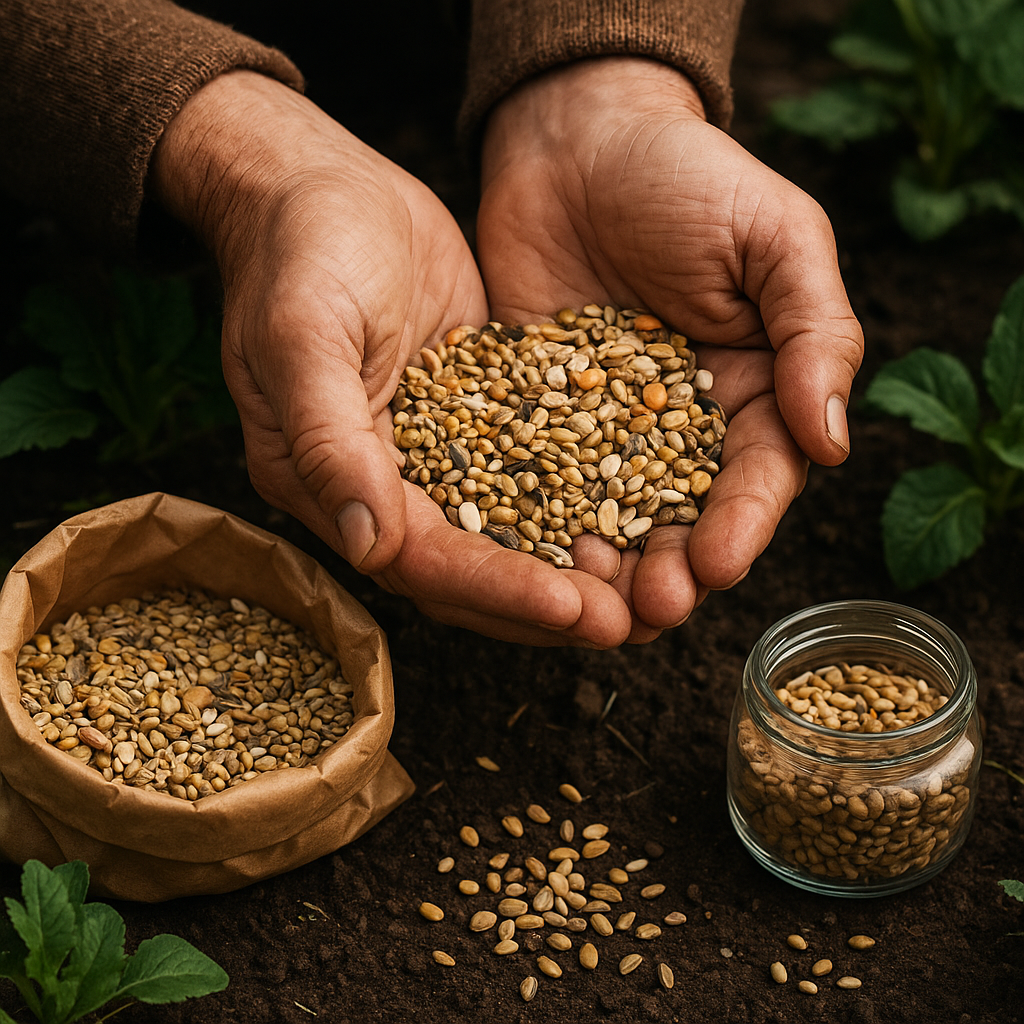
- Harvest seeds at full maturity. For grains like wheat or barley, this means waiting until the kernels harden. For legumes and vegetables, pods should dry on the plant until crispy and brown.
- Remove debris and chaff. Use sieves or gentle hand rubbing to separate viable seeds from husks and plant matter.
- Wash seeds if necessary. Some varieties benefit from a light water rinse to remove pulp, but ensure seeds are fully dry before storage to prevent mold.
Drying and Storage Conditions
Proper drying is critical. High humidity can reduce germination rates dramatically, so aim for a climate-controlled space with good airflow.
- Spread seeds thinly on a mesh tray or paper towel, and rotate them daily.
- Monitor moisture levels. Seeds should reach around 4–8% moisture content before storage.
When seeds are fully dry, store them in airtight glass jars or moisture-proof packets. Label each container with the crop name and harvest date. Keep stored seeds in a cool, dark place—temperatures between 32°F and 41°F extend viability significantly.
Preserving Biodiversity and Community Impact
The practice of seed saving holds immense ecological and cultural significance. By maintaining a diverse gene pool, farmers contribute to global efforts focused on conservation and food security. Small-scale operations, community gardens, and seed libraries play a pivotal role in keeping rare varieties alive.
Seed Exchanges and Networks
Communities can establish seed exchanges to share precious genetic resources. Local seed libraries and cooperative networks often host events where members swap open-pollinated seeds. These gatherings foster knowledge sharing, strengthen social bonds, and increase overall farm resilience.
- Organize regular swap meets at community centers or farmers’ markets.
- Keep records of exchanged varieties to track performance over time.
- Offer workshops on sustainability, organic practices, and seed cleaning techniques.
Supporting Global Efforts
Beyond local impact, seed savers contribute to worldwide initiatives such as the Svalbard Global Seed Vault. While this federal-level facility stores seeds for emergency backup, grassroots efforts ensure that seeds continue to evolve in natural conditions rather than remain static in deep freeze. By participating in networks like the Seed Savers Exchange, individuals amplify their influence and help protect food sovereignty across borders.
Educational Outreach
Engaging youth and new farmers in seed saving is key to sustaining the practice. Schools, 4-H programs, and agricultural extensions can integrate hands-on seed projects into curricula. Teaching the fundamental science of genetics and life cycles encourages the next generation to value their agricultural heritage.
- Host school garden programs focused on open-pollinated crops.
- Provide starter kits with labeled seeds, planting guides, and journals for tracking growth.
- Invite experienced seed savers to give practical demonstrations and share success stories.
Challenges and Considerations
Despite its merits, seed saving comes with challenges. Cross-pollination can compromise the purity of certain crops, and maintaining consistent quality requires vigilance. Here are a few considerations:
- Isolation distances: Ensure adequate spacing between different varieties to minimize unwanted cross-pollination, especially for crops like corn and cucumber.
- Roguing: Remove off-type plants before they flower to maintain genetic integrity.
- Record-keeping: Document each generation’s parentage, germination rates, and observed traits to make informed selections.
With systematic approaches, these hurdles become manageable, and the long-term rewards outweigh the initial efforts.
Future of Seed Saving in Farming
As industrial agriculture faces growing scrutiny over environmental impact and corporate control, seed saving emerges as a beacon of resilience. Farmers who save seeds help maintain a living repository of genetic diversity that can adapt to changing climates and emerging pests. This grassroots biodiversity initiative complements scientific breeding programs, ensuring a more balanced and sustainable agricultural future.
Whether you manage a large-scale farm or maintain a backyard plot, integrating seed saving into your practice enhances your connection to the land. It empowers you to steward your own food supply, uphold heritage varieties, and contribute to a global movement toward agricultural sustainability. Embrace seed saving today and witness the profound impact of nurturing diversity from the ground up.