Transitioning a farm from conventional energy sources to renewable alternatives offers more than mere cost reductions; it fosters sustainability, enhances resilience against market fluctuations, and contributes to a healthier planet. Embracing clean power technologies can transform farm operations, unlock new revenue streams, and position agricultural enterprises at the forefront of innovation. This guide outlines practical steps to transition your land, equipment, and processes toward cleaner energy production and consumption.
Assessing Your Farm’s Energy Requirements
Before investing in any technology, conduct a thorough audit of current energy consumption. Document electricity usage, fuel expenditures, and peak demand periods. Identify high-use equipment—irrigation pumps, grain dryers, refrigeration units—and estimate how much power they draw. Understanding your baseline consumption is essential to designing an appropriately sized renewable system.
- Monitor daily and seasonal fluctuations in power demand.
- Calculate the average kilowatt-hours (kWh) consumed per month.
- Note backup generator runtime and fuel costs.
- Determine grid interconnection capacity and limitations.
Additionally, evaluate on-site resources. Does your property receive abundant sunlight, consistent winds, or produce organic waste? These factors directly influence the feasibility of installing solar power, wind energy, or biomass systems. Map out potential installation sites, considering factors such as shading, soil stability, and proximity to electrical panels or piping infrastructure.
Selecting the Right Renewable Technologies
A variety of options exist for farms seeking to harness clean energy. Matching technology to your farm’s unique environment and operational needs ensures maximum returns on investment.
Solar Photovoltaic Systems
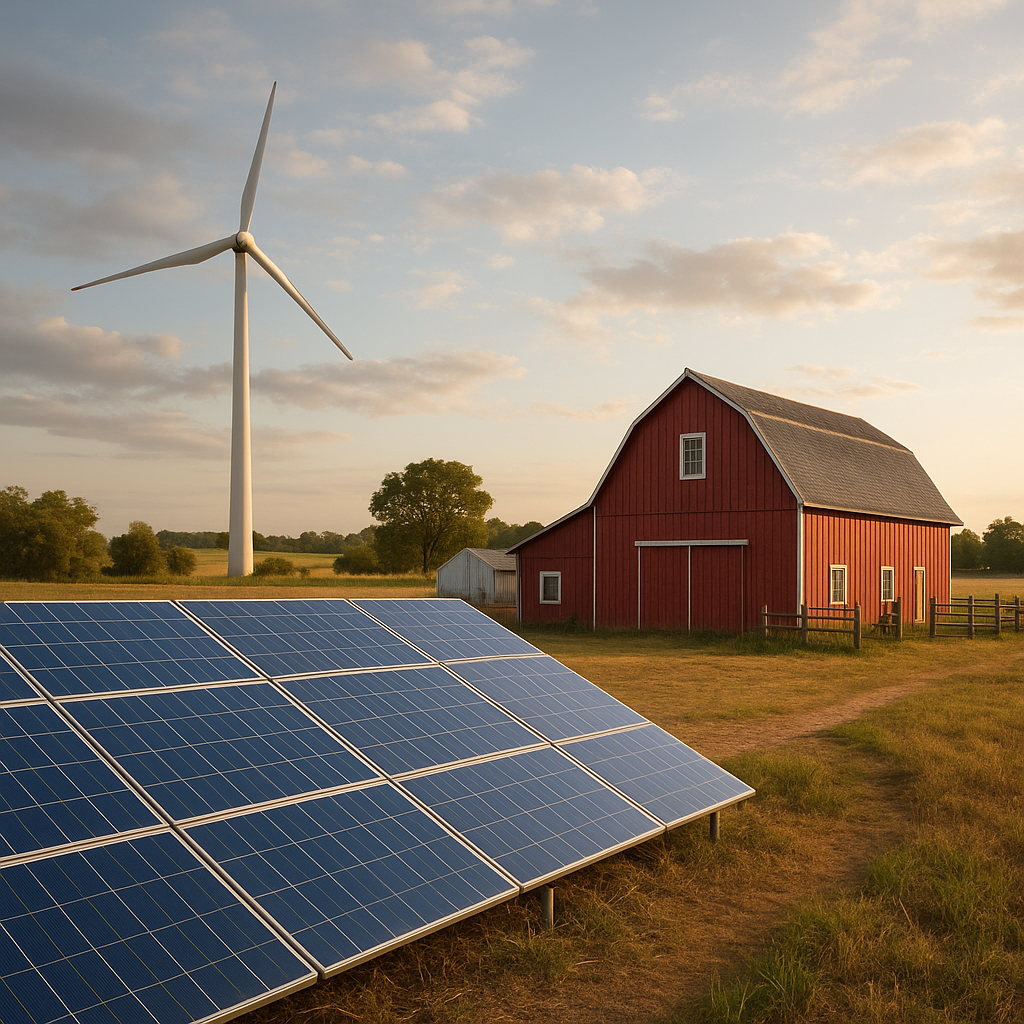
Solar panels are widely adopted due to declining equipment costs and straightforward installation. Fixed-tilt arrays, tracking mounts, and building-integrated modules each offer trade-offs between efficiency, footprint, and maintenance requirements. Solar power can offset daytime electricity loads, power irrigation, and even charge electric farm vehicles.
Wind Turbines
Small to medium wind turbines operate best in open areas with average wind speeds above 5 meters per second. Assess local wind resource data and consult wind maps to determine expected output. Modern turbine designs feature variable pitch blades and smart controllers that optimize generation and protect against high wind events.
Biogas and Biomass Systems
Organic residues from livestock, poultry, or crop processing can feed anaerobic biogas digesters. These systems convert manure and plant waste into methane, which powers generators or heating systems. Biomass boilers burning wood chips or agricultural residues may serve large-scale heating needs, particularly in cooler climates.
Financing and Incentive Programs
Securing adequate financing is often the most significant barrier to renewable installation. Explore a mix of grants, low-interest loans, tax credits, and performance-based incentives.
- Federal and State Grants: Many governments offer cost-share programs that cover up to 50% of equipment and installation costs.
- Tax Credits: Investment tax credits (ITC) can reduce income tax liability by a percentage of system costs.
- Feed-in Tariffs: Selling excess energy back to the grid under guaranteed rates provides predictable revenue.
- On-Bill Financing: Some utilities enable repayment through monthly energy bills, reducing upfront capital needs.
Engage local agricultural extension offices and renewable energy associations to identify additional incentives and navigate application processes. Work with financial institutions experienced in agricultural lending to structure loans that align repayment schedules with farm cash flows.
Implementing and Optimizing Your System
Once you’ve selected appropriate technologies and secured financing, meticulous planning and professional installation are crucial. Follow these steps to ensure smooth implementation and maximize efficiency:
- Obtain needed permits and interconnection agreements with utilities.
- Select certified installers with proven agricultural project experience.
- Coordinate equipment delivery, site preparation, and grid hookups.
- Implement remote monitoring systems to track production and detect anomalies.
Post-installation, fine-tune system performance. Clean solar panels regularly, lubricate turbine components, and manage biogas digester temperatures. Regular maintenance prolongs asset life and safeguards projected cost savings.
Integrating Storage and Grid Management
Adding energy storage can buffer intermittent generation and improve grid integration. Lithium-ion batteries, flow batteries, or thermal storage solutions help shift power to off-peak periods, stabilize voltage, and support critical loads during outages.
- Size storage capacity based on average load profiles and backup requirements.
- Incorporate intelligent energy management systems to automate charge/discharge cycles.
- Explore virtual power plant programs that aggregate farm systems for grid services.
Integrating storage elevates your farm’s resilience, reduces reliance on backup generators, and may unlock additional revenue through demand response programs.
Building Capacity and Community Partnerships
Knowledge transfer and collaboration amplify the impact of renewable transitions. Train farm personnel on system operations, maintenance tasks, and safety protocols. Partner with neighboring farms, cooperatives, or local schools to share best practices, pool resources, and advocate for supportive policies.
Hosting educational workshops or field days builds community awareness and showcases the tangible benefits of clean energy adoption. Through collective effort, farms can strengthen regional energy security, foster innovation, and cultivate a lasting culture of sustainability.