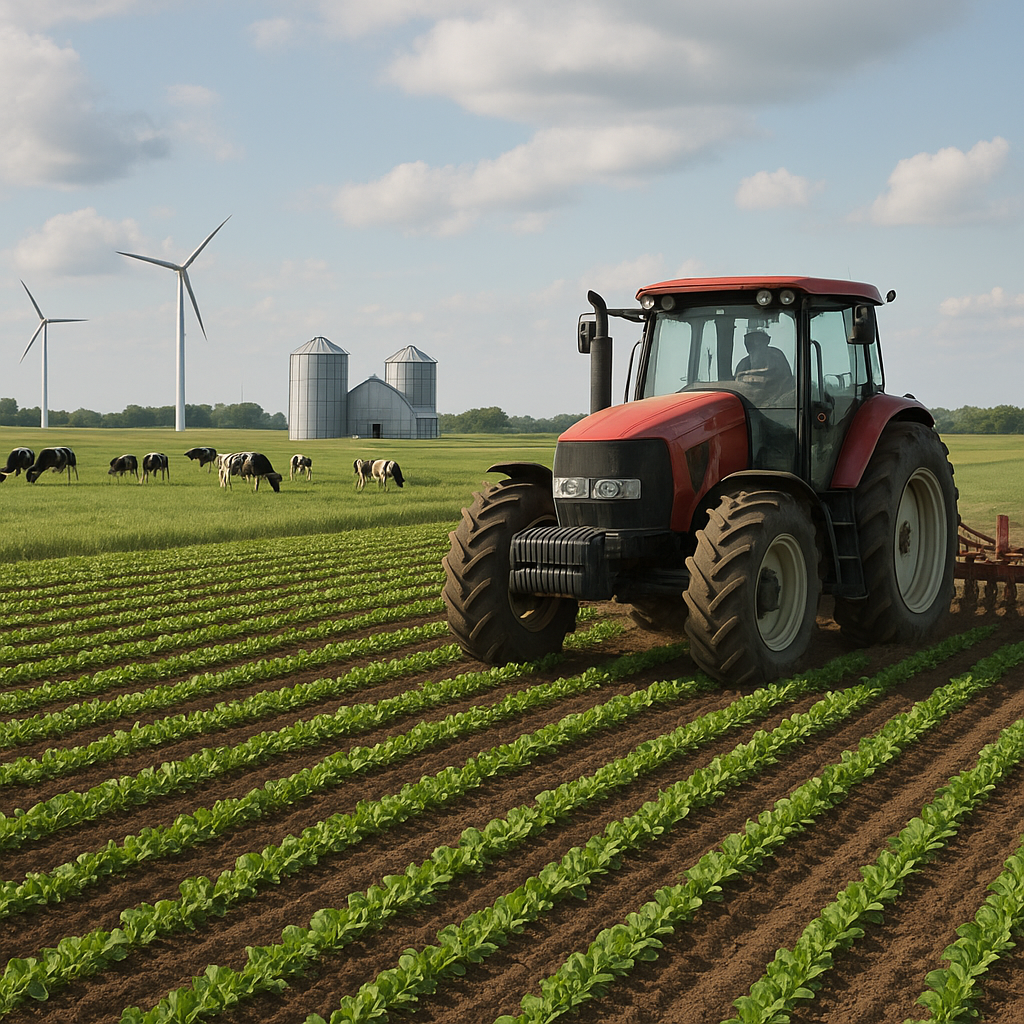
Farmers face mounting pressures to balance productivity with environmental stewardship. Effective methods to **reduce** greenhouse gas **emissions** on the farm involve innovations in nutrient handling, soil **conservation**, energy use and animal care. Integrating these approaches enhances both profitability and long-term ecological health.
Understanding Farm-Based Greenhouse Gas Emissions
Agriculture contributes a significant share of global greenhouse gases, primarily through three pathways. Enteric fermentation in ruminants generates large volumes of **methane**, nitrous oxide arises from fertilizer and manure application, and carbon dioxide is emitted via fuel combustion and land conversion. Identifying these sources is the first step toward targeted reduction strategies.
- Enteric methane from livestock digestion
- Nitrous oxide from synthetic and organic fertilizers
- Carbon dioxide from machinery, irrigation pumps and on-farm heating
- Carbon loss due to tillage, crop residue removal and poor soil cover
Strategies for Nutrient and Manure Management
Optimizing nutrient cycles can dramatically cut nitrous oxide and **methane** outputs. Better handling of manures and synthetic fertilizers improves plant uptake and limits gaseous losses.
Anaerobic Digesters
Anaerobic digesters break down livestock manure in an oxygen-free environment, capturing biogas rich in methane. Captured gas can power generators or heat farm facilities. This system reduces odor, lowers pathogen levels and delivers nutrient-rich digestate that can replace synthetic fertilizers, closing the loop on waste and energy.
Precision Fertilizer Application
Advanced soil testing, GPS-guided equipment and variable rate spreaders enable farmers to match fertilizer rates precisely to crop needs. This reduces excess nitrogen, minimizing nitrous oxide emissions and improving water quality. Techniques include:
- Soil sampling grids for detailed nutrient maps
- Automated boom control to prevent overlap
- Slow-release and stabilized nitrogen formulations
Soil Health and Carbon Sequestration
Maintaining healthy **soil** not only improves yields, but also functions as a major carbon sink. Practices that build organic matter bolster resilience to drought and erosion while locking atmospheric **carbon** underground.
Cover Cropping
Planting cover crops such as legumes, radishes or grasses between cash crops adds biomass, protects against erosion and enhances microbial activity. Deep root systems draw additional carbon into the soil profile. Benefits include improved soil structure, reduced runoff and lower fertilizer requirements.
Reduced Tillage and No-Till
Minimizing soil disturbance preserves aggregates, maintains residue cover and prevents rapid oxidation of organic material. No-till equipment drills seed directly into crop residues, cutting fuel use and building long-term organic matter levels. Over time, this practice can sequester significant quantities of carbon.
Agroforestry and Windbreaks
Incorporating trees and shrubs into fields offers multiple advantages: woody biomass stores carbon, roots improve infiltration, and windbreaks reduce soil moisture loss and protect crops. Diverse farm landscapes foster wildlife habitat and pollinator populations.
Energy Use and Renewable Solutions
Modern farms rely heavily on diesel, propane and electricity. Transitioning to **renewable** energy sources and improving efficiency can sharply reduce carbon dioxide emissions.
Solar and Wind Power
Solar panels on rooftops, ground-mounted arrays and small wind turbines supply clean electricity for barns, irrigation and processing. Net-metering arrangements or on-site battery storage ensure reliable power and may generate revenue through feed-in tariffs or renewable energy credits.
Fuel-Efficient Machinery
Upgrading to tractors and combines with advanced engine **technology** and precision controls lowers diesel consumption. Regular maintenance, proper tire inflation and intelligent route planning minimize idling and wasted fuel. Alternative fuels such as biodiesel blends can further cut net carbon output.
On-Farm Bioenergy
Crop residues, cover crop biomass and dedicated energy crops like switchgrass can be converted into heat, electricity or biofuels. Gasifiers and biomass boilers replace fossil fuels in grain dryers and greenhouse heating systems. Integrating energy production with cropping plans diversifies income streams.
Animal Husbandry and Methane Reduction
Livestock management offers key opportunities to curb **methane** emissions. Improved feed efficiency, manure handling and herd health all contribute to lower greenhouse gas intensity per unit of animal product.
Feed Additives and Dietary Adjustments
Additives such as seaweed extracts, tannins or specific oils can inhibit methanogenic microbes in the rumen, reducing enteric methane release by up to 30 percent. Balancing ration components to meet but not exceed nutrient requirements increases digestion efficiency and lowers total herd methane output.
Improved Grazing Management
Rotational and adaptive grazing systems keep pastures in optimal condition, maximizing forage quality and reducing time animals spend on low-nutrient ground. Well-managed pastures sequester carbon and require fewer supplemental feeds transported from off-farm.
Manure Storage Covers
Covers on lagoons, tanks or compost piles trap methane and channel it toward energy recovery. Even simple floating covers can cut emissions by up to 70 percent. Combining this with aerated composting processes further lowers greenhouse gases and produces stable, pathogen-free soil amendments.
Innovative Monitoring and Decision-Support Tools
Data-driven approaches empower farmers to track progress and allocate resources effectively. Adoption of new **management** tools accelerates emission reductions and demonstrates environmental leadership.
On-Farm Greenhouse Gas Inventories
Regular measurement of carbon, nitrous and methane fluxes offers a baseline for continuous improvement. Software platforms integrate sensor data, equipment logs and yield maps to estimate total farm emissions and identify high-impact interventions.
Remote Sensing and Drones
Satellite imagery, aerial photos and drone surveys monitor crop health, soil moisture and plant stress. Early detection of nutrient deficiencies or water stress minimizes over-application of fertilizers and irrigation, indirectly cutting nitrous oxide and energy-related emissions.
Decision-Support Apps
Mobile apps guide users on optimal fertilizer timing, irrigation scheduling and weather-based disease forecasts. These tools improve resource use efficiency, reduce inputs and lower carbon and nitrous oxide outputs per hectare or head of livestock.
Building a Sustainable Farm Future
Implementing these practices fosters long-term resilience against climate volatility, input price spikes and regulatory pressures. Farmers who integrate soil **conservation**, nutrient management, renewable energy and advanced livestock care will lead the transition toward truly **sustainable** food systems.