The shift towards a sustainable agricultural model places an increasing emphasis on diversifying crop systems with robust, low-maintenance species. Perennial crops have emerged as a promising solution for modern farms seeking reduced input costs, improved soil fertility, and enhanced ecosystem services. By offering year-round ground cover and deep-root systems, these plants contribute to long-term resource efficiency and ecological resilience in agroecosystems.
Understanding the Advantages of Perennial Crops
Perennial species differ fundamentally from their annual counterparts: they live for multiple growing seasons without requiring replanting. This longevity drives several key benefits for farmers and the environment alike.
- Soil health: Perennials maintain continuous root networks that help prevent compaction and promote aggregate formation in the soil profile.
- Erosion control: Their roots bind soil particles, reducing runoff and preserving topsoil during heavy rains or high winds.
- Water conservation: Deep roots access moisture from lower soil horizons, reducing irrigation needs and improving drought tolerance.
- Carbon sequestration: Year-round biomass production and root exudates enhance organic carbon storage in soil, mitigating greenhouse gas emissions.
- Biodiversity: By offering diverse habitats, perennials support beneficial insects, birds, and soil microorganisms that regulate pests and diseases.
Moreover, perennial systems often require fewer mechanical interventions, such as plowing and reseeding, which cuts down on labor, machinery costs, and fossil fuel consumption. Over time, these savings can significantly boost overall profitability and operational resilience.
Top Perennial Crops for Sustainable Farming
Choosing the right perennial crops depends on climate, soil type, and market demand. Below are some of the most promising species that combine strong economic returns with ecosystem benefits.
1. Perennial Grains
Perennial grains like Kernza (thinopyrum intermedium) are paving the way for a new era of cereal production. They offer:
- Continuous ground cover that reduces erosion and suppresses weeds.
- Deep, fibrous root systems that improve nutrient cycling and soil structure.
- A milled flour that can substitute or blend with wheat, catering to bakeries and breweries interested in novel, sustainable ingredients.
2. Fruit and Nut Trees
Almonds, hazelnuts, chestnuts, and certain fruit trees such as apples and plums serve as both cash crops and ecological allies:
- Perennial woody canopies promote carbon sequestration and shade-sensitive understory crops.
- Flowering cycles enhance pollinator populations, supporting honeybees and wild pollinators.
- Tree-based systems can incorporate agroforestry practices, integrating livestock or vegetable intercropping for diversified income.
3. Forage Crops and Cover Crops
Perennial forages such as alfalfa, clovers, and certain grasses deliver high-quality feed while stabilizing the farm ecosystem:
- Leguminous species fix atmospheric nitrogen, reducing the need for synthetic fertilizers.
- Persistent root mats limit soil erosion, particularly on sloping terrain.
- Livestock gain consistent nutrition from well-established fields, improving weight gain and dairy production.
4. Specialty Perennials
Crops like blackberries, raspberries, elderberries, and asparagus provide niche market opportunities:
- High-value fruits and vegetables suited for local farmers’ markets and value-added processing.
- Perennial stands that persist for years, reducing planting costs and labor.
- Enhanced habitat for wildlife, lending support to integrated pest management.
Implementing a Perennial-Based Farming System
Transitioning from annual to perennial cropping requires strategic planning to maximize both agronomic and economic outcomes. Key considerations include:
Site Assessment and Soil Preparation
Begin with a thorough soil test to determine pH, organic matter levels, and nutrient availability. Most perennials thrive in well-drained soils with balanced fertility. Depending on results, amendments such as lime or compost may be applied to optimize conditions for root development.
Crop Selection and Diversity
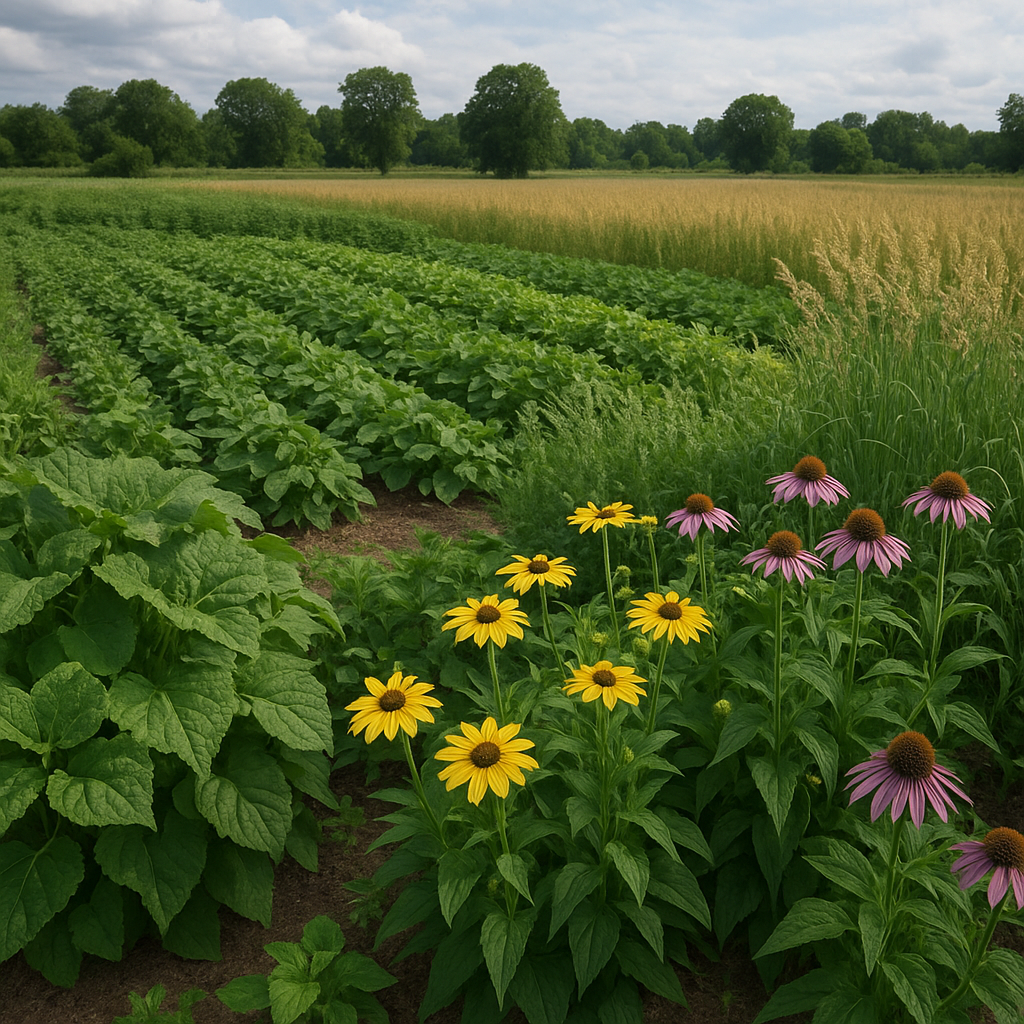
Incorporate a mix of species with complementary traits. For instance, pairing nitrogen-fixing legumes with deep-rooted grasses can enhance resilience to drought while improving overall soil nutrition. Combining tree crops with understorey perennials fosters a multilayered canopy that mimics natural ecosystems.
Planting Techniques
Precision in planting depth and spacing is vital. Seeded perennials like Kernza benefit from no-till drills to maintain soil structure. Transplanted trees and shrubs should be set at proper depths to encourage immediate root establishment.
Weed and Pest Management
Initial competition from weeds is a challenge for young perennial stands. Employ organic mulches, targeted herbicide strips, or cover crop undersowing to suppress weeds. Over time, dense perennial canopies inhibit weeds naturally. Encourage beneficial predators and pollinators through field margins and insectary strips to maintain low pest pressure.
Irrigation and Fertility
Though many perennials exhibit drought tolerance once established, young plants often require supplemental water. Drip irrigation systems can deliver moisture efficiently while minimizing disease risk. Fertility programs should emphasize slow-release or organic sources to sustain long-term nutrient cycling without leaching losses.
Challenges and Future Prospects
While the benefits of perennial cropping systems are compelling, obstacles remain:
- Breeding and seed availability: Many perennial grains and specialty species are still under development, limiting widespread adoption.
- Market infrastructure: Processors and buyers accustomed to annual commodities may need incentives to handle novel crops.
- Transition period: Farmers may experience several years of lower yields as perennials establish themselves.
Despite these challenges, ongoing research and growing consumer interest in sustainably produced food are accelerating the integration of perennials into mainstream agriculture. Collaboration between growers, scientists, and policymakers will be critical to refine breeding programs, expand market channels, and develop supportive policies that reward ecosystem services.
Integrating perennial crops into farm systems represents a powerful strategy to enhance soil health, conserve water, and boost long-term farm profitability. By harnessing the unique attributes of deep-rooted, self-renewing species, sustainable farms can build resilience in the face of climate variability while delivering nutritious, climate-friendly products to global markets.