Building an effective farm composting system goes beyond simply piling organic waste in a corner. It involves careful planning, ongoing management, and a clear understanding of biological processes. When properly executed, composting transforms kitchen scraps, crop residues, and animal manure into a rich soil amendment that enhances plant growth, improves **soil** structure, and supports **sustainable** farming practices.
Selecting the Optimal Location
Choosing the right site for your composting system can make a significant difference in convenience, **performance**, and environmental impact. Look for a level area with good drainage to prevent waterlogging. Ensure the spot receives partial **sunlight**, which helps maintain consistent temperatures, and is close enough to your fields or barn for easy access. Avoid areas prone to flooding or that are downwind from neighbors to reduce potential odor issues.
- Drainage: A slightly sloped area will shed excess moisture.
- Accessibility: Proximity to feedstock sources and fields saves time and labor.
- Shade: Overhead trees can help moderate temperatures in summer.
Designing the Composting System
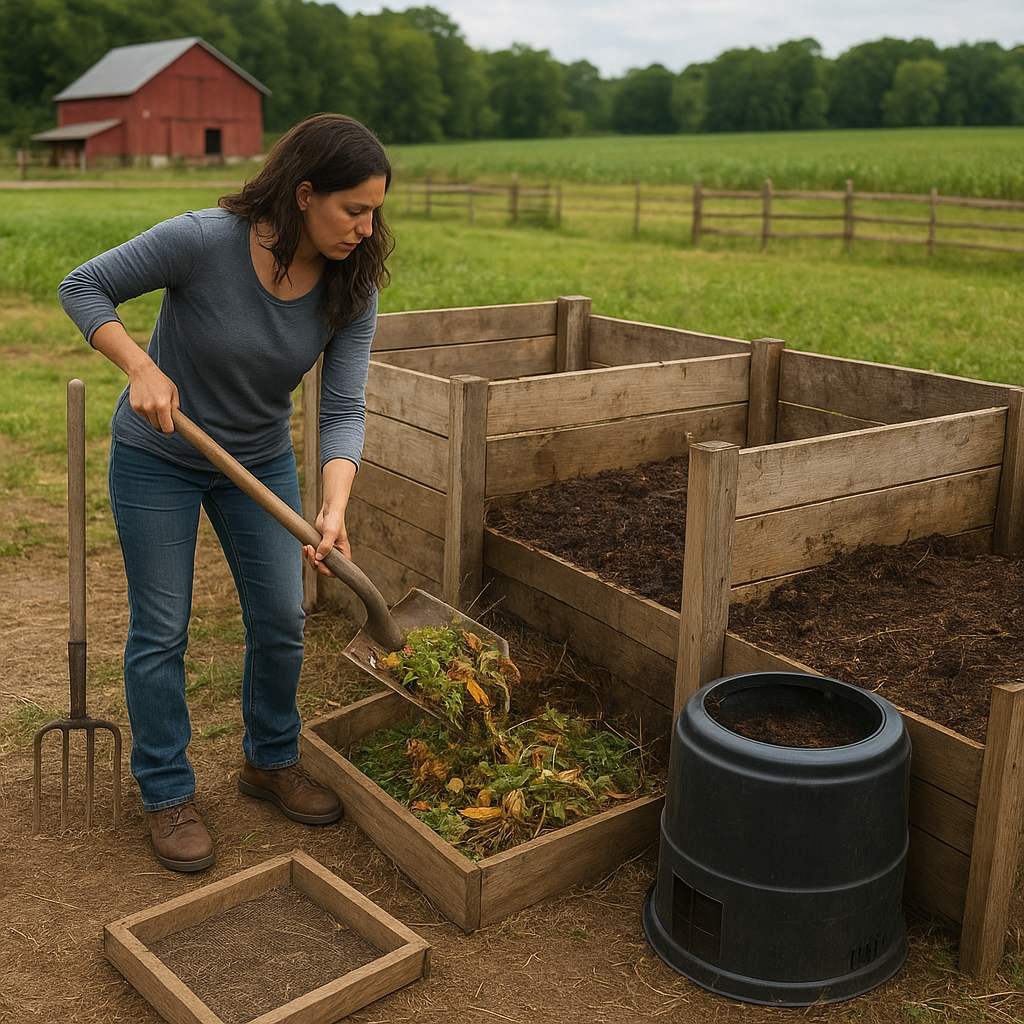
Farm composting systems can range from simple windrows to enclosed bay systems or rotating tumblers. The choice depends on scale, available equipment, and local regulations. Below are common configurations to consider.
Windrow Composting
- Long, narrow piles turned periodically with a tractor-mounted windrower.
- Ideal for large-scale farms with bulk feedstock like crop residues and manure.
- Requires ample space and good **aeration**.
Bay or Static Pile Systems
- Fixed bays built with concrete or wooden walls for containment.
- Allows for layering of materials and passive aeration through perforated pipes.
- Reduces labor compared to windrows but may need forced **aeration** systems.
Rotating Tumblers and Containers
- Sealed drums that can be rotated to mix materials.
- Suits small to medium-sized operations or demonstration plots.
- Offers rapid mixing and improved temperature control but limited volume.
Gathering and Balancing Feedstock Materials
Compost quality hinges on the right mix of **carbon-rich** and **nitrogen-rich** materials, known respectively as browns and greens. Achieving an optimal carbon-to-nitrogen ratio (C:N) around 25–30:1 accelerates **decomposition** and reduces odors.
- Greens (high in nitrogen): fresh grass clippings, vegetable scraps, coffee grounds, poultry manure.
- Browns (high in carbon): straw, dried leaves, wood chips, shredded paper.
- Bulking agents: coarse materials like small branches or shredded bark maintain porosity.
Start each pile by layering coarse browns at the bottom for drainage and aeration. Alternate greens and browns in 15–30 centimeter layers, aiming to maintain moisture similar to a damp sponge.
Managing the Composting Process
Successful farm composting requires monitoring and adjusting three key factors: temperature, **moisture**, and oxygen. Maintaining the correct conditions supports beneficial **microorganisms** that break down organic matter into humus.
Temperature Monitoring
- Use a compost **thermometer** to track internal pile temperatures.
- Thermophilic phase: 55–65°C (131–149°F) for pathogen reduction and rapid breakdown.
- Mesophilic phase: 25–45°C (77–113°F) as the pile matures and cooling begins.
Aeration and Turning
Oxygen is vital for aerobic microbes. Without enough air, piles become anaerobic, leading to foul odors and slower **nutrient** cycling. Determine turning frequency based on pile size and system type:
- Hot composting: Turn every 2–3 days to sustain high temperatures.
- Cold composting: Turn every 2–3 weeks; requires less labor but takes longer to finish.
- Static bay with forced aeration: Install perforated pipes to deliver air, reducing the need for manual turning.
Moisture Control
Maintain moisture levels between 40–60%. Too dry, and microbial activity slows; too wet, and oxygen is displaced. Use these guidelines:
- Check by squeezing a handful of material: it should form a drop or two of water but not drip freely.
- Add water with a garden hose or irrigation system during dry spells.
- In rainy seasons, cover piles with tarps or build a simple roof to prevent saturation.
Accelerating Compost Maturation
To speed up the process and ensure a uniform product, consider the following practices:
Inoculants and Starters
- Use a small quantity of finished compost or commercial microbial **inoculant** to introduce beneficial bacteria and fungi.
- Effective for jumpstarting the **decomposition** of woody or high-carbon materials.
Chopping and Shredding
- Reduce particle size of bulky feedstock such as corn stalks or wood chips.
- More surface area enhances microbial colonization and faster breakdown.
Utilizing Finished Compost on the Farm
Properly matured compost resembles dark, crumbly soil with an earthy odor. It can be integrated into farm operations in several ways:
- Soil amendment: Incorporate compost into planting beds to improve **structure**, water retention, and nutrient availability.
- Mulching: Spread a 5–10 centimeter layer around trees and shrubs to conserve moisture and suppress weeds.
- Potting mix: Blend with sand or perlite to create nutrient-rich media for seedlings and container crops.
- Top-dressing: Apply a thin layer over pasture or forage fields to gradually release nutrients.
Monitoring Soil Health
When you start using compost, track key soil parameters:
- pH: Should remain between 6.0–7.5 for most crops.
- Organic matter content: Aim to raise levels gradually to 5–10%.
- Microbial activity: Healthy soils will show increased earthworm counts and beneficial microbial biomass.
Adapting to Seasonal and Scale Variations
Farm composting isn’t a one-size-fits-all process. Adjust strategies based on your climate, available labor, and production goals:
Cold Climates
- Use larger piles or enclosed bins to retain heat.
- Add insulating materials like straw bales around the pile perimeter.
- Accept slower microbial activity during winter months and ramp up turning in spring.
Dry or Arid Regions
- Monitor moisture more frequently and automate irrigation if possible.
- Use shade cloth over piles to reduce evaporation.
High-Volume Operations
- Invest in machinery such as front-end loaders and windrow turners.
- Set up multiple turning lanes or compost bays to streamline processing.
- Implement record-keeping to track pile compositions and maturation times.