Effective weed control is essential for maintaining healthy crop yields and promoting sustainable farming practices. This article explores a range of non-chemical strategies that enable farmers to suppress unwelcome plants while improving soil health and fostering long-term resilience in their fields. By integrating a variety of methods—ranging from cultural adjustments to mechanical and biological tactics—agricultural operations can achieve robust weed management without depending on synthetic herbicides.
Principles of Non-Chemical Weed Control
Understanding Weed Ecology
Successful weed management begins with a thorough knowledge of weed life cycles and their environmental preferences. Many undesirable plants thrive in disturbed soil and open sunlight. By recognizing each species’ germination triggers—such as temperature fluctuations or moisture levels—farmers can time interventions more precisely. Some key ecological insights include:
- Seedbank dynamics: most weed seeds remain viable in the soil for several years, requiring ongoing efforts to deplete their reserves.
- Light and temperature cues: exposing buried seeds to sunlight can stimulate germination, whereas consistent soil cover may suppress sprouting.
- Competition strategies: established crops with vigorous growth provide natural weed suppression through shading and nutrient uptake.
Timing and Monitoring
Vigilant scouting and precise timing are critical for non-chemical approaches. Regular field inspections help detect emerging weeds at the most vulnerable stages. An integrated timeframe might involve:
- Pre-plant monitoring: remove early flushes of weeds before sowing seeds or transplanting seedlings.
- Post-emergence checks: identify and eliminate young weeds within the first two weeks of crop growth, when manual removal is most effective.
- Seasonal mapping: record hotspot areas where weed pressure is highest to target those zones with more frequent interventions.
By combining these monitoring practices with predictive models—based on weather and soil conditions—farmers gain a strategic advantage in reducing overall weed density.
Cultural and Mechanical Practices
Crop Rotation and Diversification
Implementing diverse crop rotations disrupts weed life cycles by changing planting dates, canopy structures, and root architectures. For example, alternating between deep-rooted and shallow-rooted species can deprive specific weeds of their preferred niches. Benefits include:
- Breaking pest and disease cycles alongside weed management.
- Enhancing nutrient cycling and reducing soil erosion.
- Promoting a balanced ecosystem, where beneficial insects and soil organisms thrive.
Tillage, Flame Weeding, and Mechanical Disturbance
Physical control remains one of the oldest and most reliable ways to manage weeds. Key methods:
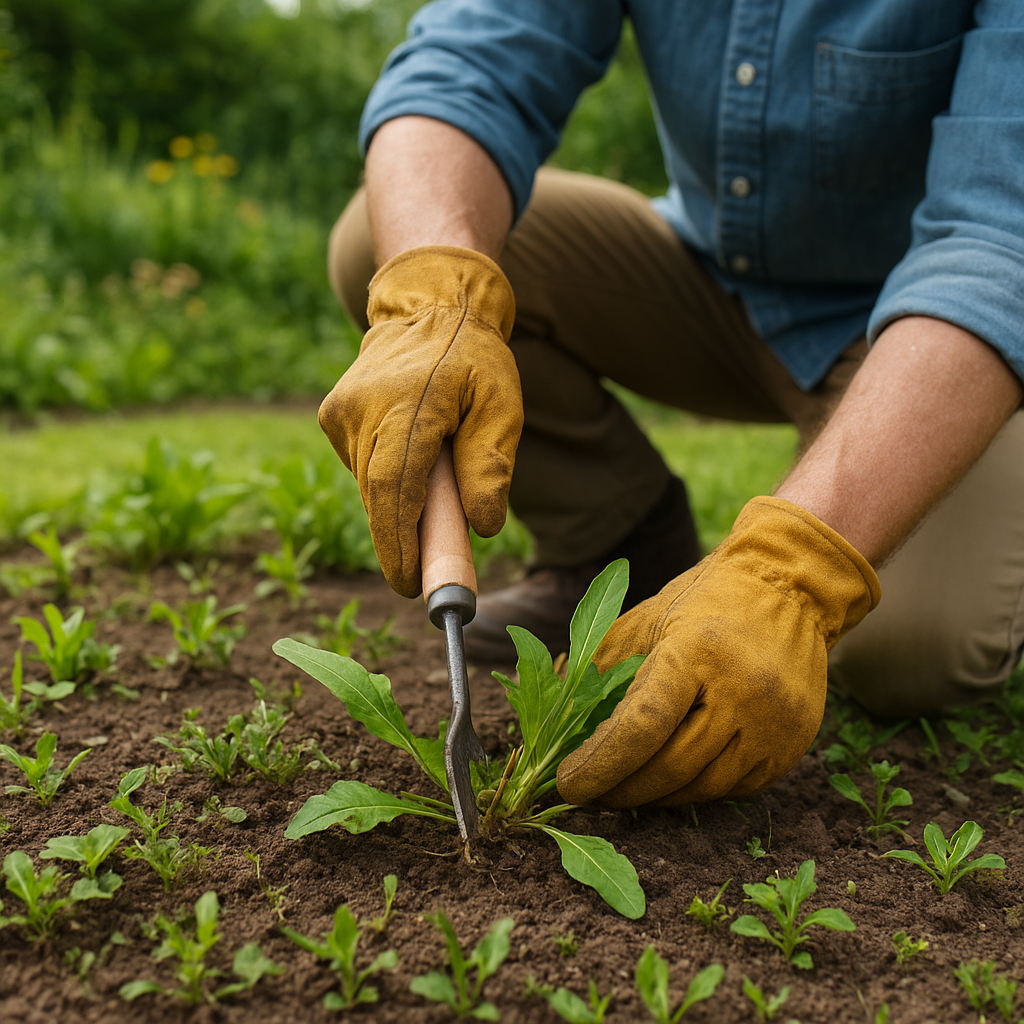
- Hand hoeing and manual cultivation: ideal for small-scale or high-value crops where precision is essential.
- Rotary tilling: disrupts weed roots and seedling shoots, but should be timed carefully to avoid bringing dormant seeds to the surface.
- Flame weeding: uses high-temperature gas flames to scorch young weed tissue without harming deeper crop roots.
Combining shallow tillage with post-emergence flame applications can reduce weed pressure significantly, provided soil moisture is managed to prevent drought stress in crops.
Organic Mulches and Cover Crops
Benefits of Mulching
Applying a thick organic mulch layer suppresses weeds by blocking light, retaining soil moisture, and moderating temperature fluctuations. Effective materials include:
- Straw, wood chips, and shredded bark
- Compost-based mixtures rich in organic matter
- Cocoa hulls or sugarcane bagasse in specialized horticultural settings
When correctly applied, mulches can reduce weed emergence by up to 90 percent. They also contribute to long-term soil fertility as they decompose and feed microbial communities.
Choosing the Right Cover Crop
Cover crops provide living mulch during fallow periods, competing aggressively with weeds and protecting the soil surface. Popular options include:
- Legumes (e.g., clover, vetch) to fix atmospheric nitrogen and suppress broadleaf weeds.
- Grasses (e.g., rye, oats) that establish dense root mats, preventing soil erosion and crowding out early weed flushes.
- Brassicas (e.g., mustard, radish) with biofumigant properties that naturally reduce certain soil-borne pests.
Terminating cover crops at the optimal growth stage ensures that their residues form a robust mulch, continuing weed suppression while easing subsequent planting operations.
Advanced Techniques and Integrated Approaches
Solarization and Thermal Methods
Soil solarization employs clear plastic tarps to harness the sun’s energy, raising soil temperatures to levels that inactivate many weed seeds and soil pathogens. Key considerations:
- Timing: best applied during the hottest months for four to six weeks.
- Plastic type: UV-resistant plastic maximizes heat retention.
- Soil moisture: pre-irrigate to enhance heat conduction and ensure uniform temperatures.
Solarization can reduce weed pressure by up to 80 percent in the upper soil strata, making it a powerful tool in organic systems.
Biological Control Agents
Introducing competitive or predatory species offers a targeted way to manage specific weeds. Examples include:
- Allelopathic plants: certain varieties release natural chemicals into the soil that inhibit weed seed germination.
- Grazing animals: controlled grazing by sheep, goats, or poultry can reduce young weeds before crop planting.
- Pathogenic fungi and insects: research into mycoherbicides and herbivore insects is expanding the arsenal of biological tools available to farmers.
While biological control requires careful planning to avoid unintended ecological impacts, it can become a self-sustaining component of integrated weed management.
Integrated Weed Management (IWM)
By combining multiple non-chemical strategies—cultural, mechanical, biological, and thermal—farmers achieve superior long-term control compared to relying on a single tactic. Core elements of IWM include:
- Continuous monitoring and adaptive decision-making.
- Strategic sequencing of interventions to target weeds at their most vulnerable growth stages.
- Record-keeping and data analysis to refine methods and enhance efficiency over successive seasons.
When executed effectively, integrated approaches not only reduce weed density but also support healthier crops, improved yields, and a more resilient agroecosystem.