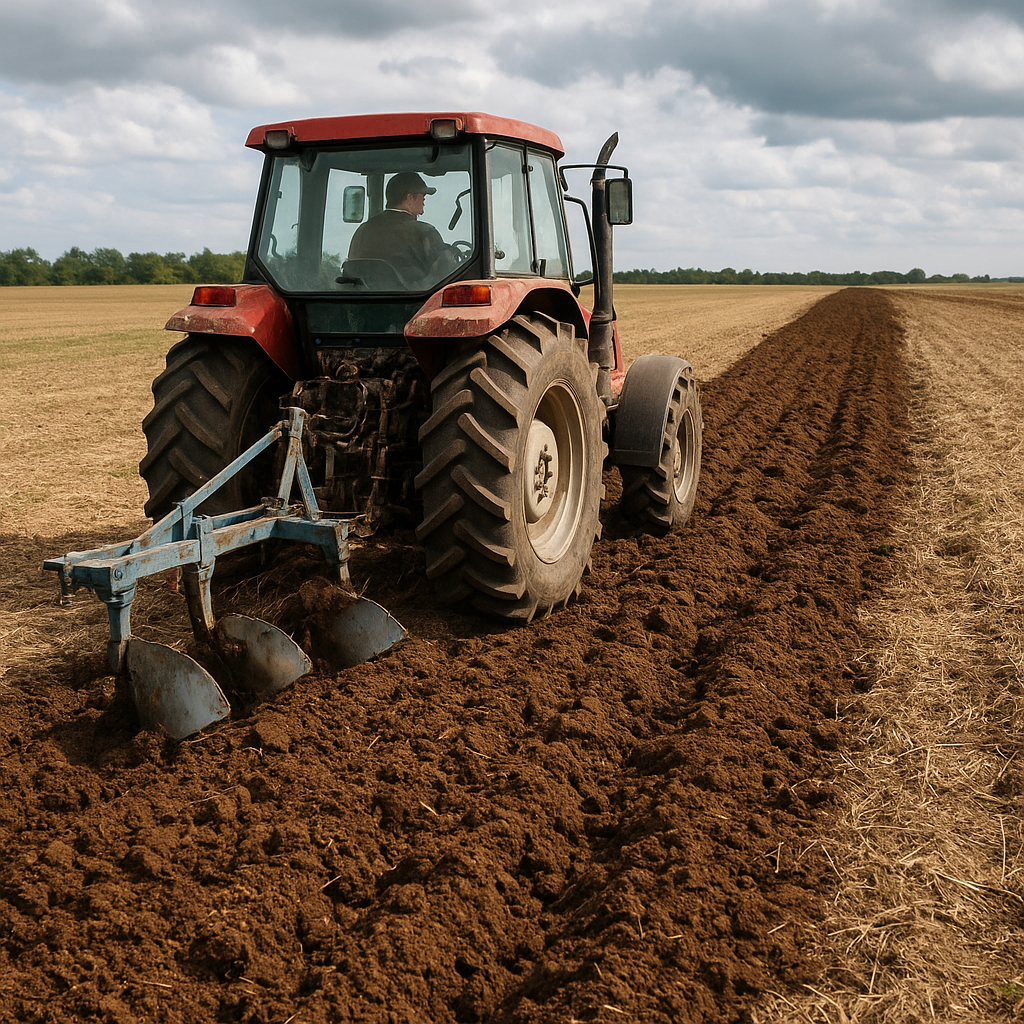
Plowing may seem like a simple, repetitive task, but even experienced farmers often make small mistakes that quietly reduce yield, waste fuel and damage soil over time. Paying attention to proper **plowing** technique and equipment setup can make the difference between an average and an excellent season. On plowing-tips.top/ you can find many ideas for improving field work, but it is also crucial to understand what usually goes wrong on the farm. This article looks at the most common plowing mistakes farmers make, explains why they are harmful, and suggests practical ways to avoid them so that the soil remains healthy, machinery lasts longer and crops reach their full potential.
Ignoring soil conditions before plowing
One of the most frequent errors is plowing without checking the current condition of the soil. Farmers often follow a fixed calendar, entering fields on the same date every year instead of looking at moisture content, texture and compaction.
Plowing soil that is too wet leads to smeared furrow walls and a compacted layer under the plow depth. This reduces root penetration and water infiltration for years. On the other hand, plowing when the soil is extremely dry can create large clods that are hard to break down later, increasing fuel use during secondary tillage.
Good practice is to test a handful of soil from several places in the field. If it forms a tight plastic ball or ribbon in your hand, it is too wet to plow. If it crumbles easily with little pressure, conditions are usually right. Monitoring recent rainfall, drainage patterns and the behavior of machinery tires in the field also helps decide the correct timing.
Different soil types demand different decisions. Light sandy soils tolerate earlier field entry, while heavy clay requires more patience. Regular observation of color, smell and structure of the top layer helps detect whether biological activity and soil **health** are being preserved or damaged by the chosen plowing date.
Using the wrong plowing depth
Another widespread mistake is setting a uniform plowing depth for all fields and seasons. Many farmers choose a depth simply because “it always worked before,” without considering crop needs, soil type, compaction layers or previous tillage operations.
Plowing too shallow leaves weed seeds and plant residues near the surface, where they compete with the next crop. It may also fail to break compacted layers created by heavy machinery. At the same time, going too deep can bring sterile subsoil with low **fertility** to the surface, dilute organic matter and increase fuel consumption dramatically.
Proper depth should be adapted to the root system of the planned crop, the thickness of the topsoil and the location of any plow pan or compacted horizon. Sometimes, alternating shallow and slightly deeper plowing in different years helps maintain structure while still breaking compaction when needed.
Farmers should periodically check furrow profiles behind the plow using a spade. By observing where the dark organic topsoil ends and the lighter subsoil begins, it is possible to adjust the plow to stay mostly within the fertile layer and just slightly loosen the zone below it when necessary.
Incorrect plow adjustment and leveling
Even the best plow will perform poorly if it is not adjusted correctly. An uneven or poorly leveled plow can leave ridges, depressions and an irregular seedbed that causes patchy emergence and unequal plant development.
If the first furrow slice is cut deeper or shallower than the rest, the plow will pull sideways and waste power. Incorrect hitch settings can cause the front bodies to work differently from the rear ones, producing a wavy bottom that traps water in some places and dries out others. This inconsistency becomes visible throughout the season as uneven crop height and variable **yield**.
Before starting a new field, it is advisable to park the tractor and plow on a flat surface and check lateral and longitudinal level. Top link length and side stabilizers should be adjusted so that all bodies work at the intended depth. Wheel track width and the cut of the first body must also be aligned with the tractor path.
During the first pass, the operator should stop after a few meters and inspect the furrow: are slices turning uniformly, is the bottom flat, and is residue being covered as planned? Taking time to correct settings early saves many hours and much fuel later.
Neglecting machinery maintenance
Poor maintenance is another classic source of plowing problems. Worn shares, dull moldboards and loose bolts are often overlooked in the rush to enter the field on time. However, these seemingly small issues have a large impact on quality and cost of field work.
Dull or worn shares require more draft force and create larger clods, because instead of slicing through the soil they push and tear it. Bent or rusty moldboards fail to turn the furrow slice completely, leaving residues on the surface and increasing erosion risk. Missing or loose bolts can cause irregular working width and unexpected breakdowns during the busiest days.
A regular inspection schedule before and after the plowing season can prevent most of these difficulties. Checking wear parts, measuring their remaining length, cleaning and greasing moving parts, and replacing critical components on time keeps the plow working efficiently.
Keeping records of operating hours and conditions helps plan when to sharpen or change shares. Investing in maintenance might seem expensive in the short term, but lower fuel consumption, fewer interruptions and better soil structure make it profitable in the long run.
Overlooking soil compaction and plow pan
Many farmers focus only on the top 20 to 30 centimeters of soil and forget what happens beneath the plow layer. Repeated plowing at the same depth and use of heavy machinery can create a compacted layer known as plow pan.
This compacted zone restricts root growth, reduces water infiltration and increases surface runoff. Crops may appear healthy at first but suffer stress during dry or very wet periods because their roots cannot reach deeper water and nutrients. Yields may then fluctuate strongly from year to year.
To identify a plow pan, digging soil pits or using a penetrometer is helpful. If roots are concentrated above a hard layer and change direction when they reach it, compaction is likely present. In such cases, simply plowing deeper with the same implement often makes the problem worse by moving compaction even lower.
Occasional use of deep loosening implements or subsoilers at variable depths, combined with reduced traffic on wet fields, can restore vertical **porosity** and root pathways. Mixing organic matter into the soil and maintaining living roots for as many months as possible each year also supports natural biological loosening.
Improper residue and trash management
Crop residues and plant trash can be a valuable source of organic matter and nutrients, but only if they are handled correctly during plowing. A common mistake is entering the field when residues are too long, uneven or badly distributed.
In such cases, the plow may clog frequently, forcing the operator to stop, reverse and clean the implement. This delays work and can damage both soil structure and the plow. Poor residue coverage also leaves patches exposed to wind and water erosion, while some zones receive too thick a layer that slows warming and drying in spring.
It is important to chop straw and stalks evenly during harvest and spread them across the full cutting width of the combine. If residues are extremely heavy, a light pass with a disc implement before plowing can improve flow and prevent blockages. Adjusting skimmers, trash boards and working depth helps achieve a balance between coverage and surface protection.
Maintaining an adequate ratio between residues and soil contact promotes rapid decomposition. This increases soil **organic** matter, improves structure and supports beneficial organisms that contribute to long-term fertility and resilience.
Plowing on steep slopes in the wrong direction
On sloping land, the direction of plowing has a strong influence on erosion risk. A frequent mistake is plowing straight up and down the slope because it is the simplest and fastest way to work the field.
However, furrows running downhill become channels for water during rains, accelerating runoff and carrying soil particles to the bottom of the slope or into nearby waterways. Over time, this leads to loss of topsoil on upper parts of the field and accumulation of sediments below, where water may stagnate.
Whenever possible, plowing across the slope or on the contour is preferable. This layout slows water movement and encourages infiltration, protecting the structure and fertility of the top layer. On very steep ground, reducing plowing intensity or replacing it with minimum tillage practices may be necessary to maintain long-term productivity.
Combining contour plowing with grassed buffer strips and permanent vegetation in the most vulnerable zones provides additional protection. Farmers should monitor visible signs such as rills, gullies and depositional fans after heavy rains to evaluate whether their plowing direction is safe for the landscape.
Failing to adapt to changing climate conditions
Climate patterns in many regions are becoming less predictable, with more intense rainfall events, longer dry periods and sudden temperature changes. Continuing to plow exactly as in the past is another mistake that can reduce **productivity** under these new conditions.
Heavy storms shortly after plowing can destroy fragile soil aggregates if they are left bare, leading to crusting and erosion. Extended dry spells may make deep plowing unnecessary or even harmful, because it exposes moist layers to rapid evaporation. Some seasons may favor reduced tillage or delayed operations to preserve moisture and avoid compaction.
Farmers should integrate local weather forecasts, soil moisture monitoring and long-term climate tendencies into their plowing decisions. Being flexible with timing, depth and intensity helps protect soil resources and adapt to year-to-year variability.
Diversifying crop rotations, including cover crops and maintaining surface residues can also decrease sensitivity to weather extremes. By adjusting plowing practices to the evolving climate, farmers safeguard soil function and stabilize yields over time.
Ignoring economic and energy efficiency
Plowing is one of the most energy-demanding operations on the farm, yet many farmers rarely analyze its true cost. Using too large a tractor for a small plow, driving at the wrong speed or making unnecessary passes all increase fuel consumption and operating expenses.
Working too fast may create poor soil inversion and clods that require extra harrowing, while going too slow wastes time and underuses the tractor’s capability. Choosing the right gear and engine speed to keep the machine in an efficient power band can save a significant portion of fuel without reducing quality.
Planning field routes to minimize overlaps and deadhead driving between plots also contributes to efficiency. Recording fuel used per hectare and comparing different setups helps identify the most economical combination of tractor, plow and speed.
Modern approaches encourage farmers to see plowing not only as tradition but as an investment that must pay back in yield and soil improvement. By optimizing energy use, they improve profitability and reduce environmental impact at the same time.
Not evaluating results after plowing
Finally, a subtle but important mistake is failing to evaluate the results of plowing once the job is done. Many operators leave the field as soon as the last pass is finished, without revisiting it to observe how the soil responds over weeks and months.
Systematic observation can reveal issues that remain hidden during the operation itself. Uneven emergence patterns, waterlogging in low spots, persistent weeds or crusting after rains all provide clues about what went wrong in the plowing process.
Taking notes or photographs, mapping problem areas and comparing them from year to year allows farmers to refine their techniques. Simple checklists after plowing can include questions such as: Is residue distribution uniform? Is the furrow bottom level? Are clods within an acceptable size range for the planned crop? Do wheel tracks appear excessively compacted?
By treating each season as an opportunity to learn, farmers turn plowing from a routine action into a managed process with continuous improvement. Over time, this approach leads to more stable yields, healthier soil and more efficient use of labor and machinery.
Conclusion
Common plowing mistakes often stem from habit, time pressure and insufficient attention to soil behavior. Working in the wrong conditions, using improper depth, neglecting equipment adjustment and ignoring compaction or erosion risks can silently undermine soil **structure** and farm profitability.
By monitoring moisture, observing the field profile, maintaining machinery, managing residues wisely and adapting to slopes and climate, farmers can transform plowing into a tool that builds rather than destroys soil potential. Taking the time to analyze results after each season completes this cycle of improvement. With thoughtful practice, plowing becomes an effective step toward sustainable, productive agriculture for the long term.